 Donate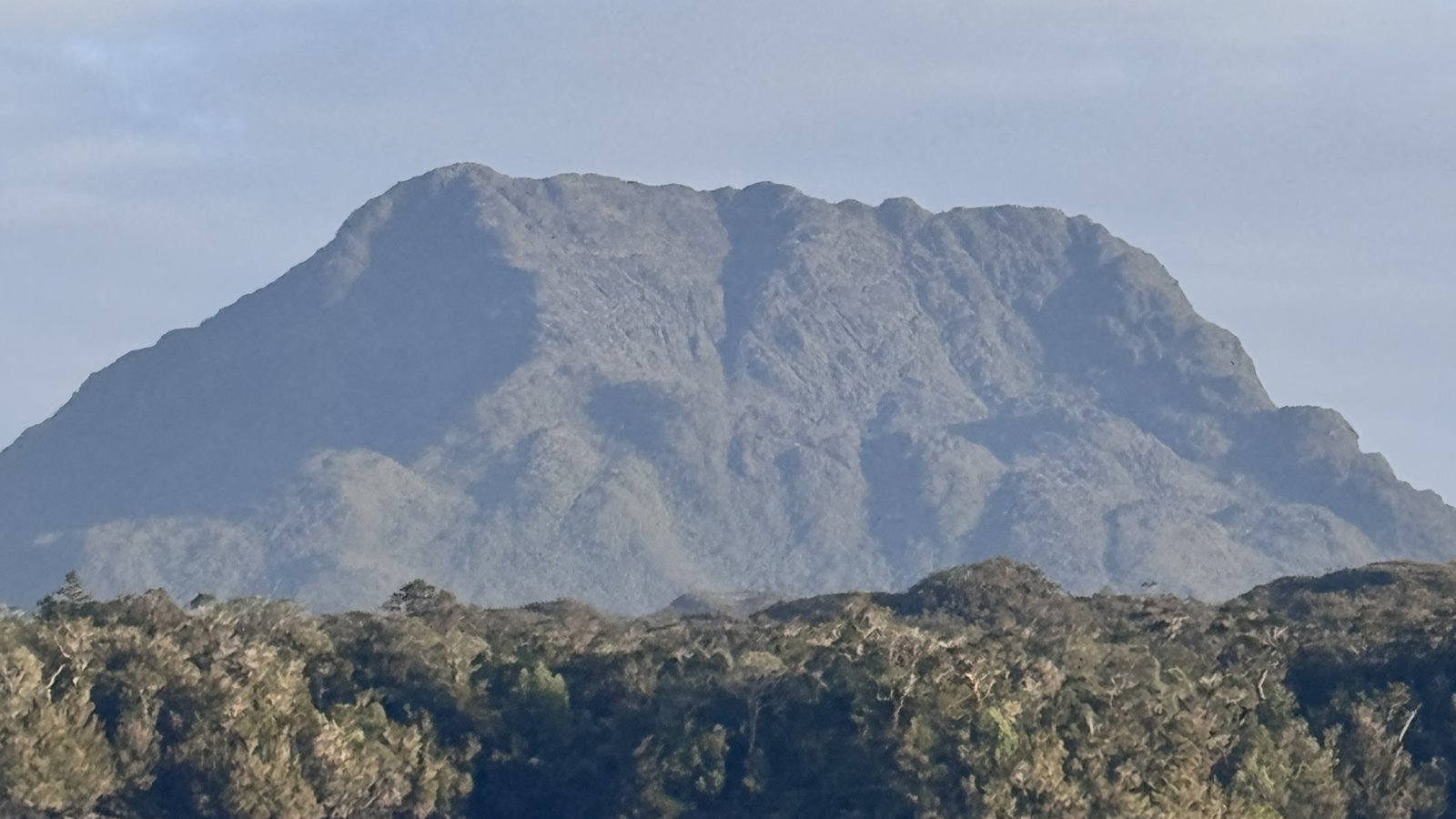
Thursday, April 9, 2026
We are now exiting Canal Ninualac into Canal Moraleda, beginning a straight northbound push toward Golfo Corcovado. From here, it’s approximately 225 miles to Puerto Montt. If nothing else, this expedition—especially Patagonia—has been a constant series of transitions.
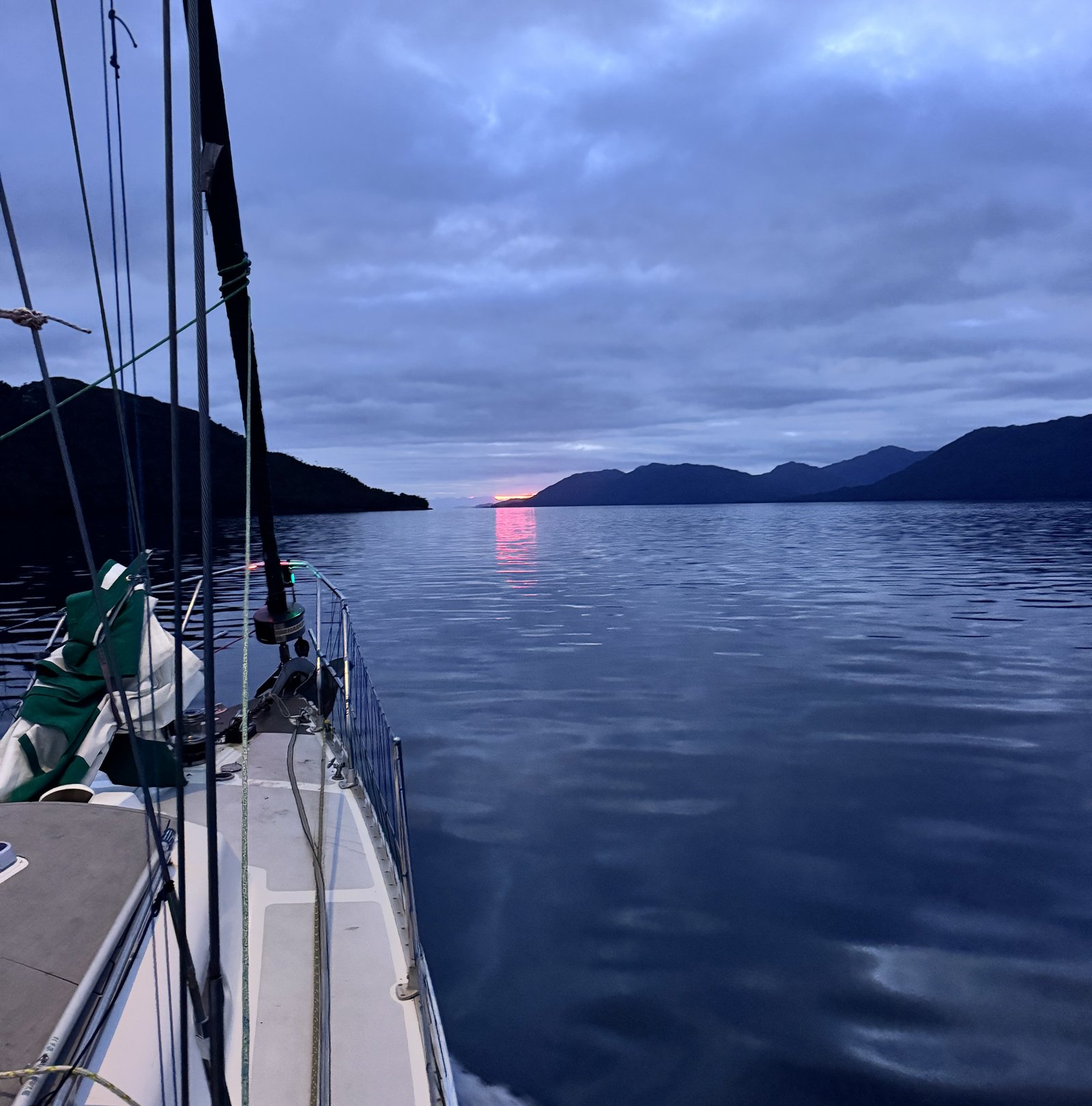
But before we arrived here, we had to cross the Golfo de Penas. Along with a group of three other sailboats, we planned our move north to escape the deep south and its relentless storms.
A few nights ago, we made that attempt. We reached the gulf at sunset—the mainland mountains glowing pink, the open water ahead surprisingly calm for such a notoriously intimidating stretch. The wind had eased, the swell was moderate, and all signs pointed to a favorable crossing. The three other boats followed about 15 miles behind us.
Mark went down for a nap while Tess stood watch. As darkness fell, I suddenly felt nauseous and dizzy. Then the cabin filled with a bitter white smoke. I opened windows and the companionway, quickly realizing the danger—exhaust was entering the boat.
Amid the scramble to air out the cabin, Mark woke and immediately ordered us to turn around. We were about ten miles from Isla Schroeder, Isla Wager, and Caleta Ideal—a familiar anchorage from our southbound journey.
We turned back, keeping fans and windows open, and made our way toward Wager Island. As some of you may know, this area inspired The Wager, a true story of shipwreck, mutiny, and survival—an ominous backdrop for the night… hmm, great.
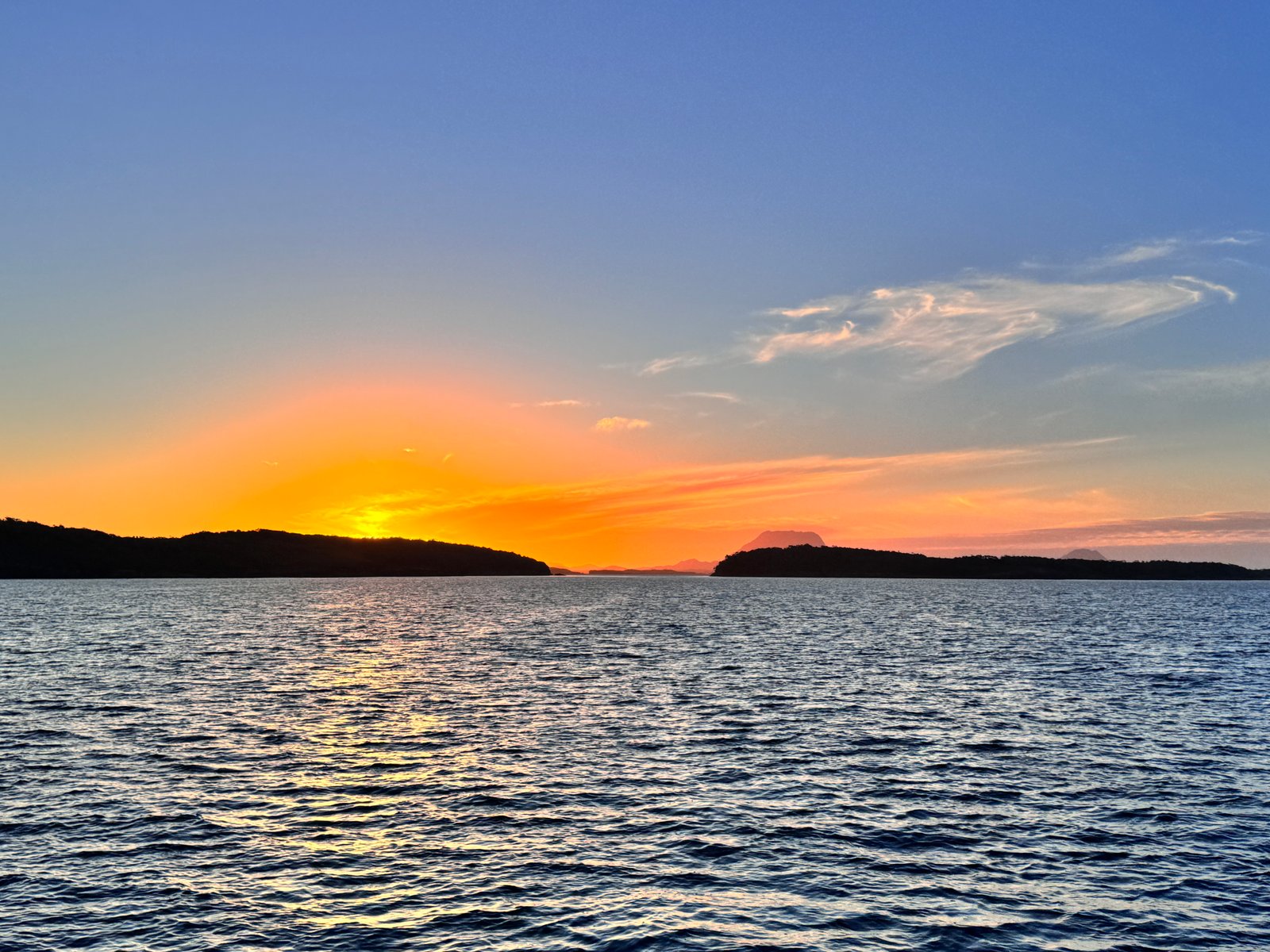
We stayed in contact with the boats behind us, all of whom offered assistance or even to turn around. After troubleshooting with Tim and Mike back home, we believed we had what we needed if the issue was what we suspected—a cracked exhaust pipe in the engine room. Confident we could manage, we thanked them and wished them fair winds as they continued north to catch the weather window.
These weren’t people we knew well—just brief encounters in Puerto Williams and Puerto Eden—but in a place this remote, everyone shows up for each other. Watching their running lights fade into the distance as we turned back felt both isolating and deeply humbling.
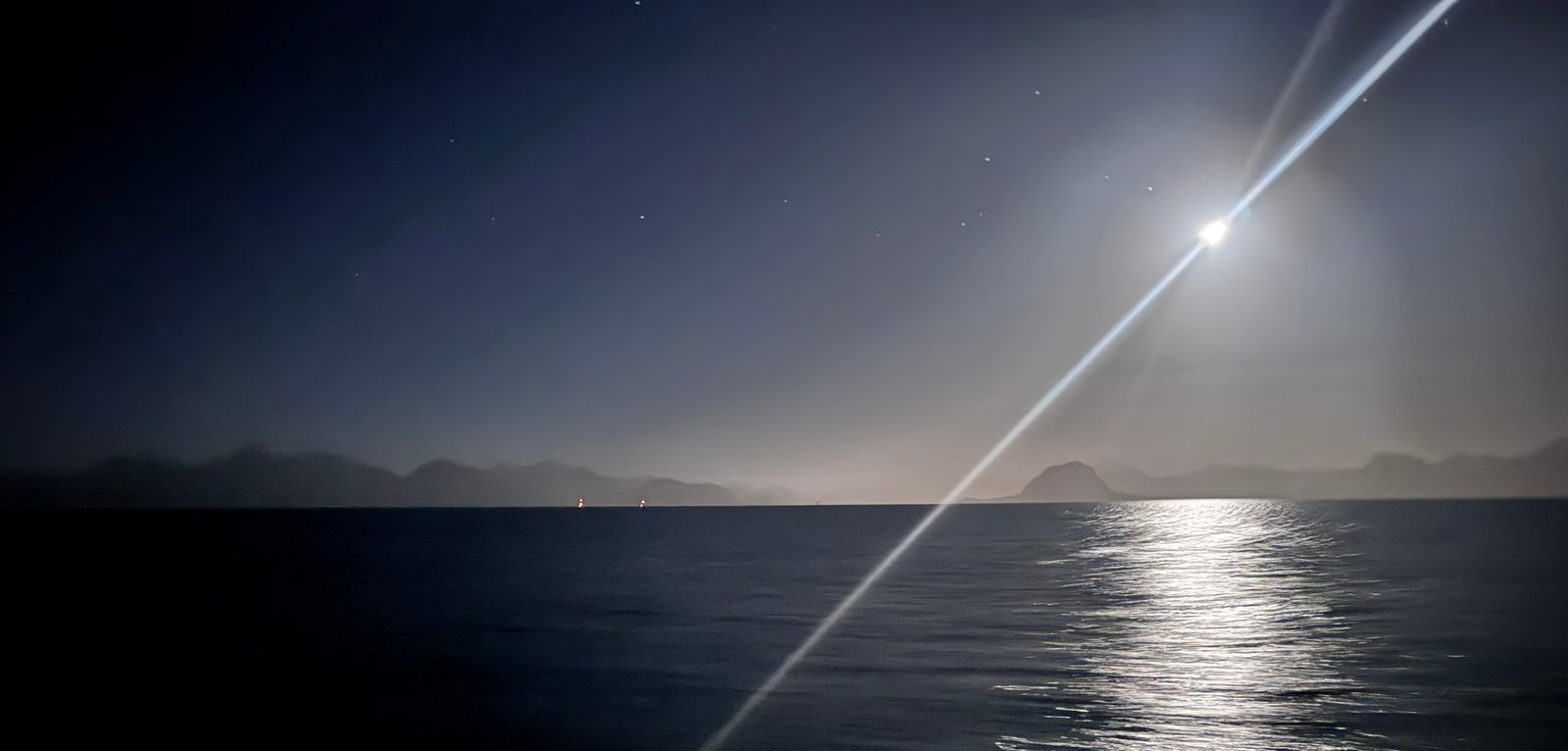
As we approached Caleta Ideal, it felt entirely different this time. On our previous visit, we arrived exhausted after a rough crossing, unfamiliar with navigating tight channels, anchoring in small caletas, and doing it all in the pitch black of night. Now, after more than a month in the fjords, the team moved with confidence and precision—even in the dark.
I dimmed the instruments and let my eyes adjust to the moonlit entrance. Glassy water slid quietly along the hull of One Ocean as we guided her in. We dropped anchor in near silence—so quiet you had to strain to hear anything. If not for the trail of carbon monoxide, it would have been a perfect arrival in an idyllic “Ideal” caleta.
Before the anchor mud had even settled, Mark—“Mark Macgiver”—was already in the engine room inspecting the damage. I noted the time (2300), knowing full well we wouldn’t be sleeping anytime soon, despite earlier plans to rest and then tackle the problem.
Once we removed the insulation, we found the crack in the exhaust pipe. I won’t detail every step of the temporary repair, but everyone was up for problem-solving, rolling tinfoil packing, vacuuming soot, eating tomato soup, and doing whatever was needed. What a crew. (You can find the repair video on our social channels.)
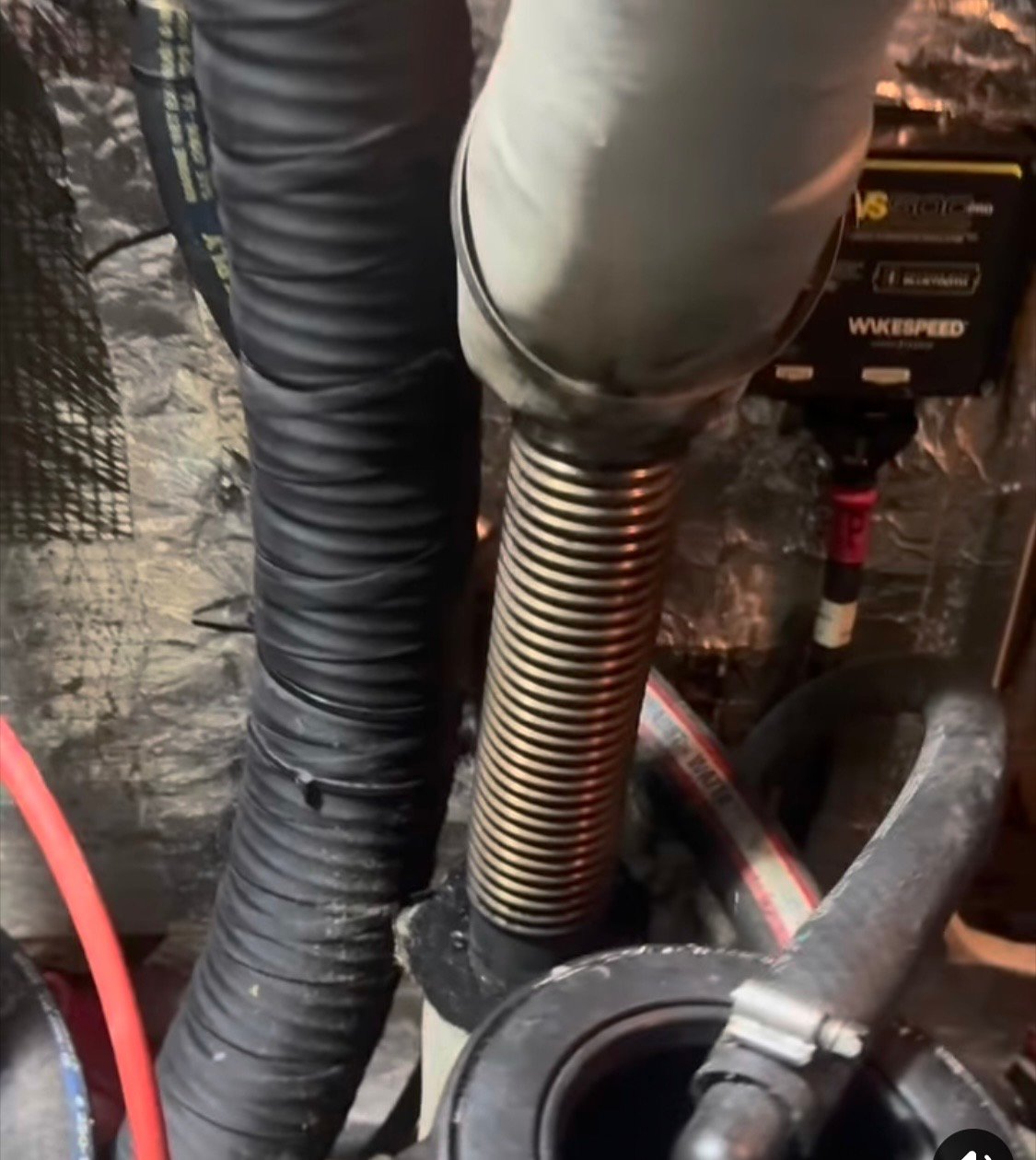
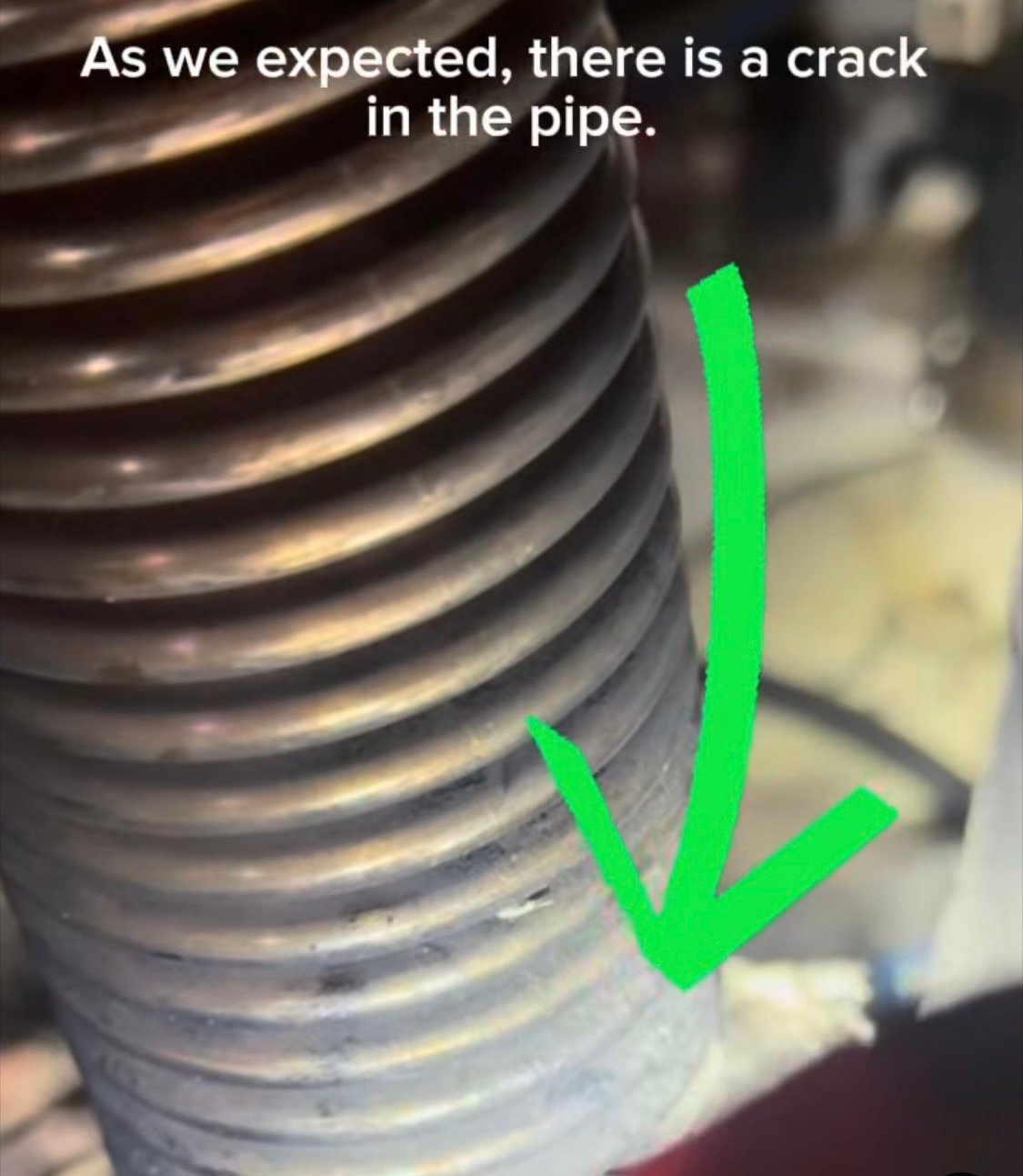
The fix is holding for now, but it’s high on the list once we reach Puerto Montt. That list has grown long—unsurprising after nearly 18,000 nautical miles on a 30-year-old boat. Puerto Montt will be a place for maintenance, provisioning, and connection.
Not only has Mark Macgyver been busy as the onboard engineer, he has also been writing and continuing to encounter incredible connections to the 2009/10 expedition. In Puerto Williams, we met someone inspired by One Island, One Ocean to become a sailor and citizen scientist. Then in Puerto Eden, we met someone, who had once considered buying Ocean Watch and had dinner at Mark’s farm back in 2010. These kinds of connections seem to happen at nearly every stop! Mark's most recent post - Perspectives is another deeply reflective piece.
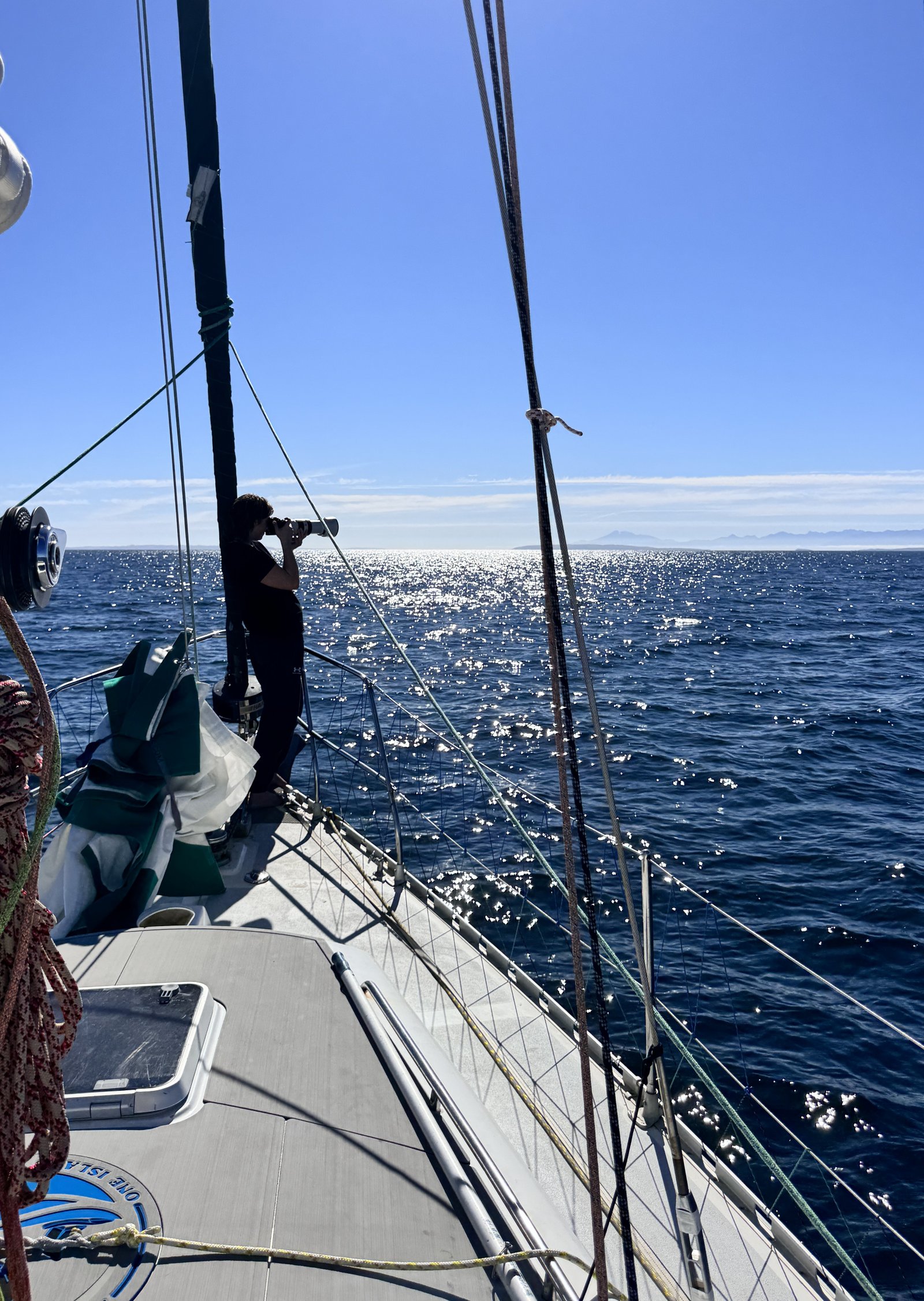
Meanwhile, Tess has been hard at work on our social media and capturing incredible whale photography. The abundance of marine life this past month has been extraordinary and invaluable for our whale identification research. Grace will have years of data to work through! Tess wrote an incredible blog called Whale Entry.
If you missed our last live class, it truly was a “whale” of a time. We were joined by Janie Wray (CEO and lead researcher) and Grace Baer (biologist and project manager) from one of our research partners, BC Whales, who shared how drones are being used to study and protect whales. You can watch the replay here: Around the Americas: How Drones Can Save Whales.
On April 17th we have a special live class called Bats in Patagonia. While in Puerto Williams, we met Xenabeth Lazaro—while she was scooping us ice cream—only to discover she’s a bat biologist studying species in the region. She had so much passion and excitement, that we couldn’t resist asking if she’d be interested in joining us for one of our live classes on Exploring By the Seat of Your Pants. It may not be ocean related, but what are the chances of having a scientist scoop you ice cream and talk about bats on Navarino Island! And to top it off, it’s International Bat Appreciation Day on April 17th! Keep an eye out for the link!
We also had a fantastic turnout for our online presentation hosted at the Anacortes Yacht Club, with participants joining from across Skagit Valley. Thanks to Mike Beemer, the Marine Tech Center, Lorena and Leonard Landon and all the volunteers for helping to pull this off! We shared expedition stories, research, and our outreach work—and answered questions from the audience. Just before going live, we experienced a bit of onboard drama, which I wrote about in my latest blog: High Latitudes – Just Another Day in the Office.
Thank you again to everyone who attended the Anacortes Yacht Club presentation. We look forward to continuing to share our journey—through stories, research, and education. Now more than ever science, education and your support matters. Please feel free to share this with anyone who may appreciate our efforts. Thank you.