 Donate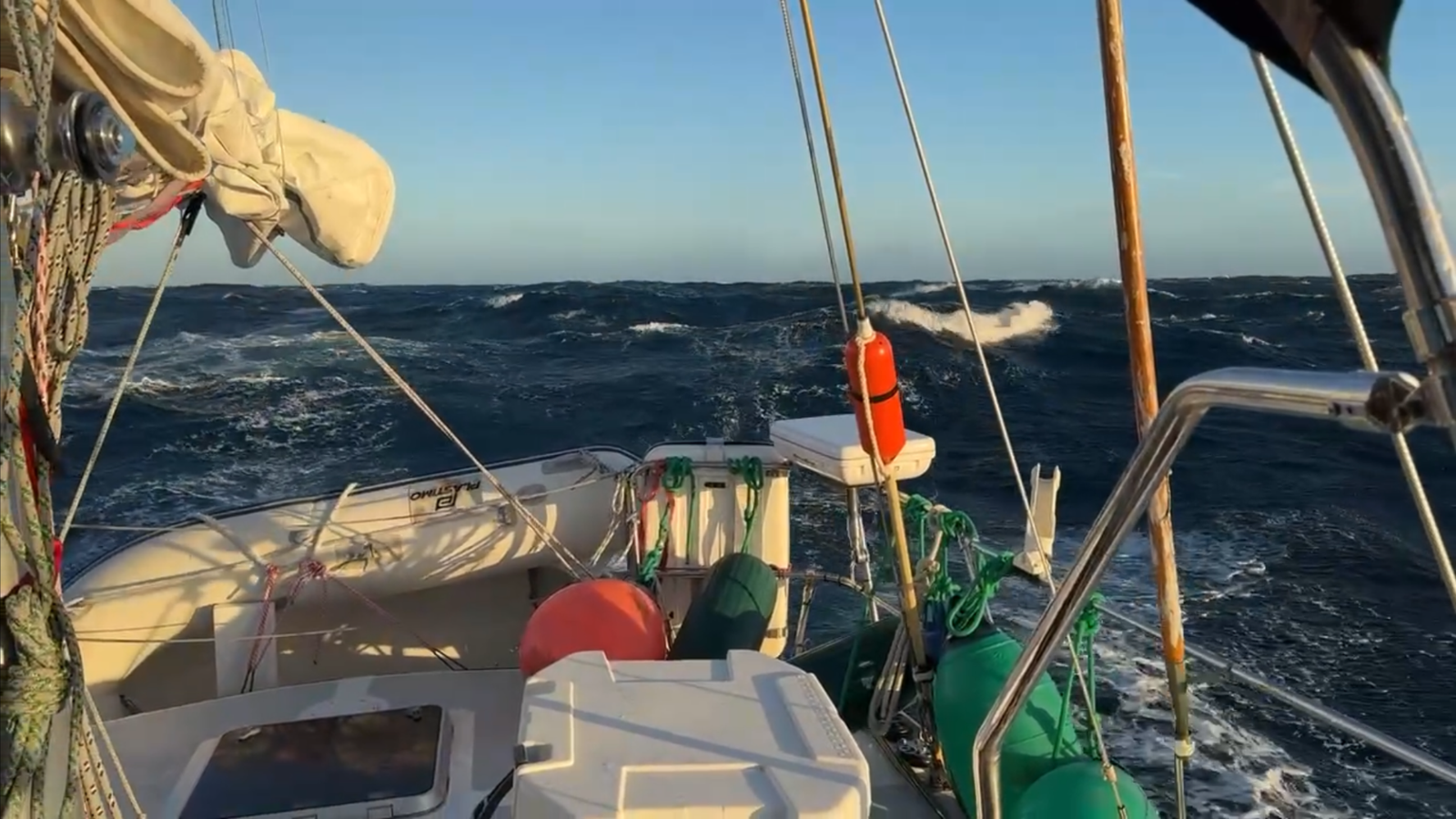
We all do the best we can with the decisions that come our way each day. Our lives are shaped by thousands upon thousands of choices linked together — some small and forgettable, others carrying enormous consequence. Our lives become a reflection of those decisions. Out here at sea, deciphering and analyzing constantly is part of sailing — it is sailing. Reading the weather, reading the sea state, reading one another, anticipating what could happen hours before it arrives. Every choice matters, yet certainty never exists. It reminds me of a statement Mark once said to me as we faced a storm on the northern end of Haida Gwaii, he told me to forget everything he’d just advised me to do because tomorrow it would all be different. How right he was.
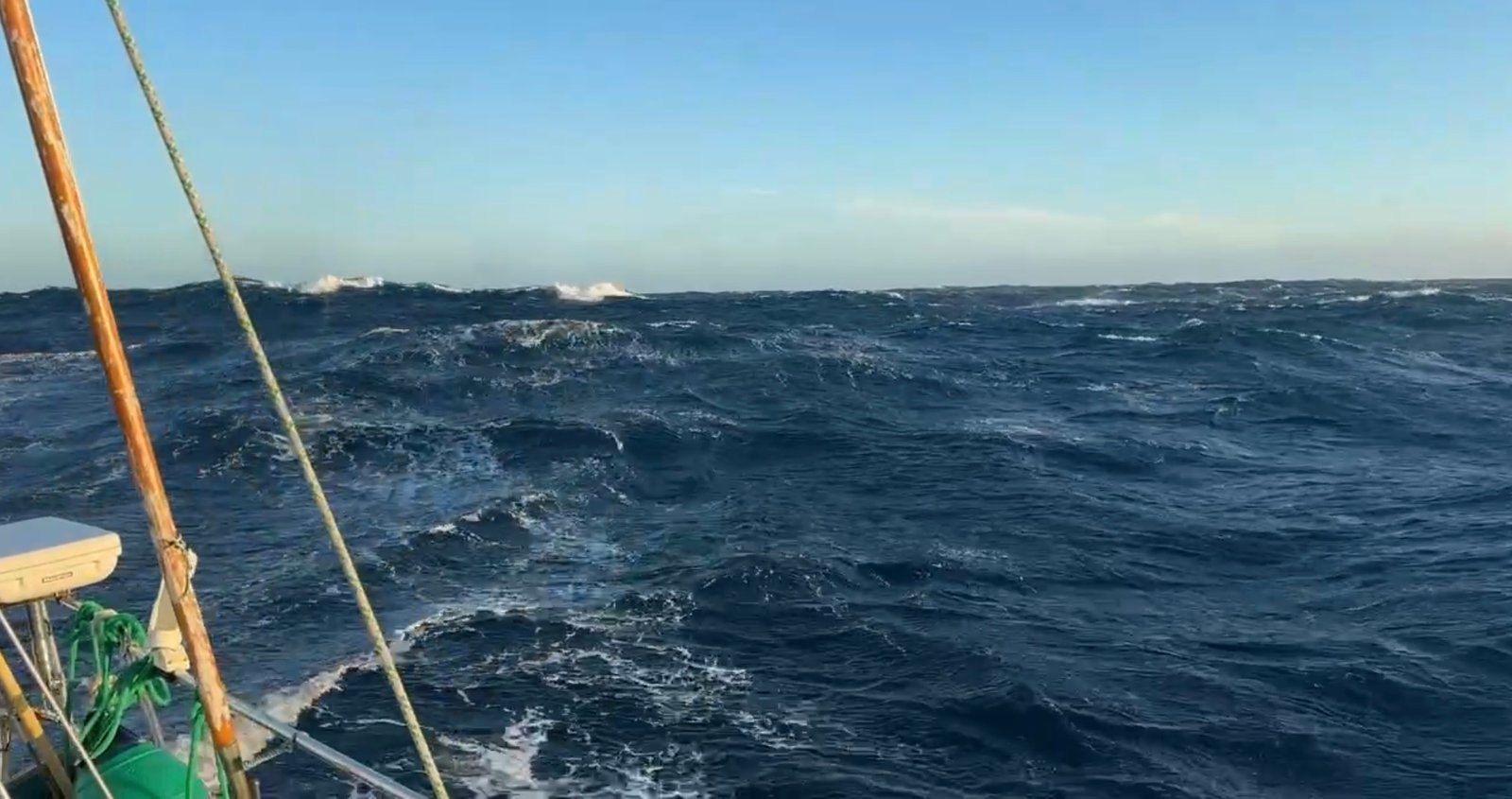
The seas have finally calmed. After more than five days, I woke to soft, quiet water over 400 miles offshore of northern Chile, nearing the border of Peru. It’s been nearly as many days since we’ve seen another ship. This is the most remote I’ve ever been, and in the stillness, I can finally appreciate the moment.
My arms and body are weary from the work and stress we’ve been under — the constant motion through a windstorm, the massive swell, and then the repairs afterward. We spent all of Mother’s Day working on the mainsail. It had taken a beating in the storm.
Earlier, as the storm was really beginning to build, I had wanted to bring the main down before nightfall and put up the storm sail. My Windy app was predicting gusts into the high 40s, and the wind had already climbed quickly into the mid-30s throughout the day. Mark didn’t think we needed to change sails yet — though later, I realized part of him may already have known we were past the point where it could be done safely. Decisions at sea are rarely black and white. They come from experience, instinct, timing, fatigue, weather models, and countless subtle variables that can’t always be explained. Sometimes you make the right call. Sometimes the ocean humbles you anyway.
Once the wind climbed into the high 40s and low 50s, the autopilot could no longer keep up, and we had to go out into the darkness and hand-steer — something none of us had the energy for. We were already exhausted, our bodies bruised and battered from being thrown around by every crashing wave for days now, since we’d left Concon.
We decided to try lowering the main.
Mark stayed at the halyard in the cockpit while Tess steered from inside the cabin. I climbed onto the cabin top, gripping the boat hook in one hand while hooking my arm under a halyard to stabilize myself as the boat pitched violently. It was pitch black outside — no moon, no stars — only the roar of waves hammering the hull.
We maneuvered the boom out to starboard, but when we tried lowering the halyard, the sail refused to move.
I clipped the boat hook onto the cars of the mainsail track and pulled again and again with everything I had.
Nothing.
Finally, I dropped to my knees, with exhaustion grateful for my Mustang foul-weather pants and their built-in kneepads, which had saved my knees more than once on this trip. I picked myself up and tried again.
At one point, I was practically hanging from the hook with my full body weight. Suddenly, the hook bent and sprang free, throwing me backward. I grabbed onto the rigging to keep from being thrown overboard. The end of the hook was now useless.
Mark joined me at the mast, but the sail still wouldn’t budge. He shouted that he needed to try pulling the mainsail down on the leech side of the sail. That part was at the end of the boom, hanging over the water.
The mainsail hung twisted and swollen with wind about one-third of the way down the mast. Just looking at it made my stomach drop.
Mark climbed onto the rooftop, clipped in his safety harness, but that only meant he wouldn’t be swept away. As he leaned out over the dark, unforgiving water, terror flooded through me. Tears filled my eyes. We couldn’t hear each other over the wind, but I was screaming as I grabbed the luff of the sail and pulled with all my strength.
Not even a budge.
I looked over at Mark.
Nothing.
I screamed for him to come back. A wave crashed over the boat, soaking my legs. I wasn’t cold — I was working too hard for that — but my whole body ached. I’d been at the mast for what felt like forever, and every wave slammed me hard against it.
In moments like that, decisions narrow to one thing at a time. One movement. One adjustment. One problem to solve before moving to the next.
Mark climbed back to the mast. We held onto the mast bouncing against the rigging with every crashing wave. We both knew the mainsail wasn’t coming down. It was stuck on something. Mark asked me to get lines for him. He was going to lash the sail as best he could.
I shimmed along the deck, clipping into the jacklines, when another wave hit us hard and we surfed down the face of a steep swell. The autopilot couldn’t recover quickly enough.
I heard Tess yell.
She couldn’t see us from inside and had no idea what was happening.
I climbed into the cabin and hugged her. I told her she was doing great and gave her a quick update. But the feeling was all too familiar — too much like the storm in the Atlantic. The PTSD was real for both of us.
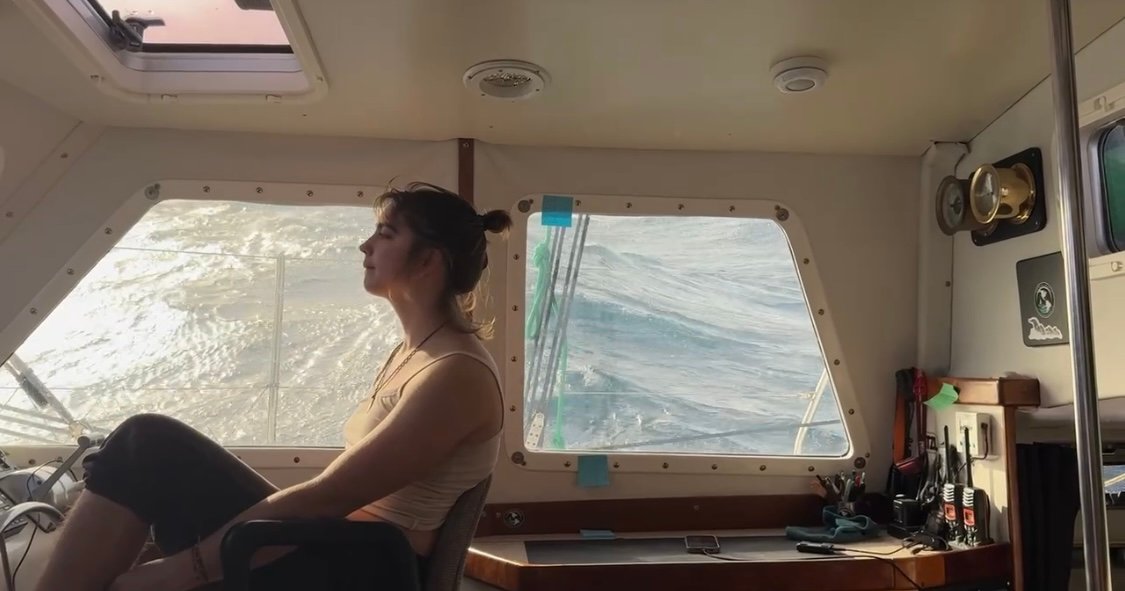
Still, she focused on steering. She was a rock if I’ve ever seen one. Calm, steady, dependable. Yet this was too much responsibility for anyone, especially at only twenty-one years old — keeping us safe while we fought the storm outside in darkness.
I told her I had to get the lines back to Mark, but that I’d return to check on her.
Every step was difficult as the boat shuddered and groaned beneath my feet. I got the lines to Mark and then made my way back into the cockpit to communicate with Tess while Mark methodically secured the mainsail. Even then, part of it remained wrapped around the mast, bloated with wind.
Together, Mark and I adjusted the boom to keep us from becoming overpowered.
Next came the storm boards for the port-side windows.
It took both of us to control the boards once I brought them out into the wind. The gusts tried to rip them from my hands. Kneeling on the narrow side deck, we screwed the boards over the cabin windows, hoping to spare ourselves the trauma of waves exploding against the glass all night long.
Back inside, we finalized our preparations by boarding up the cockpit door — just in time before a massive wave crashed into the cockpit, filling it with water.
Even with the damaged mainsail awkwardly lashed, One Ocean still surged forward at 8–10 knots. The good news was the autopilot could now manage the sail configuration.
As I reached to switch off the spreader lights, I looked up at the mainsail.
It was a sickening sight.
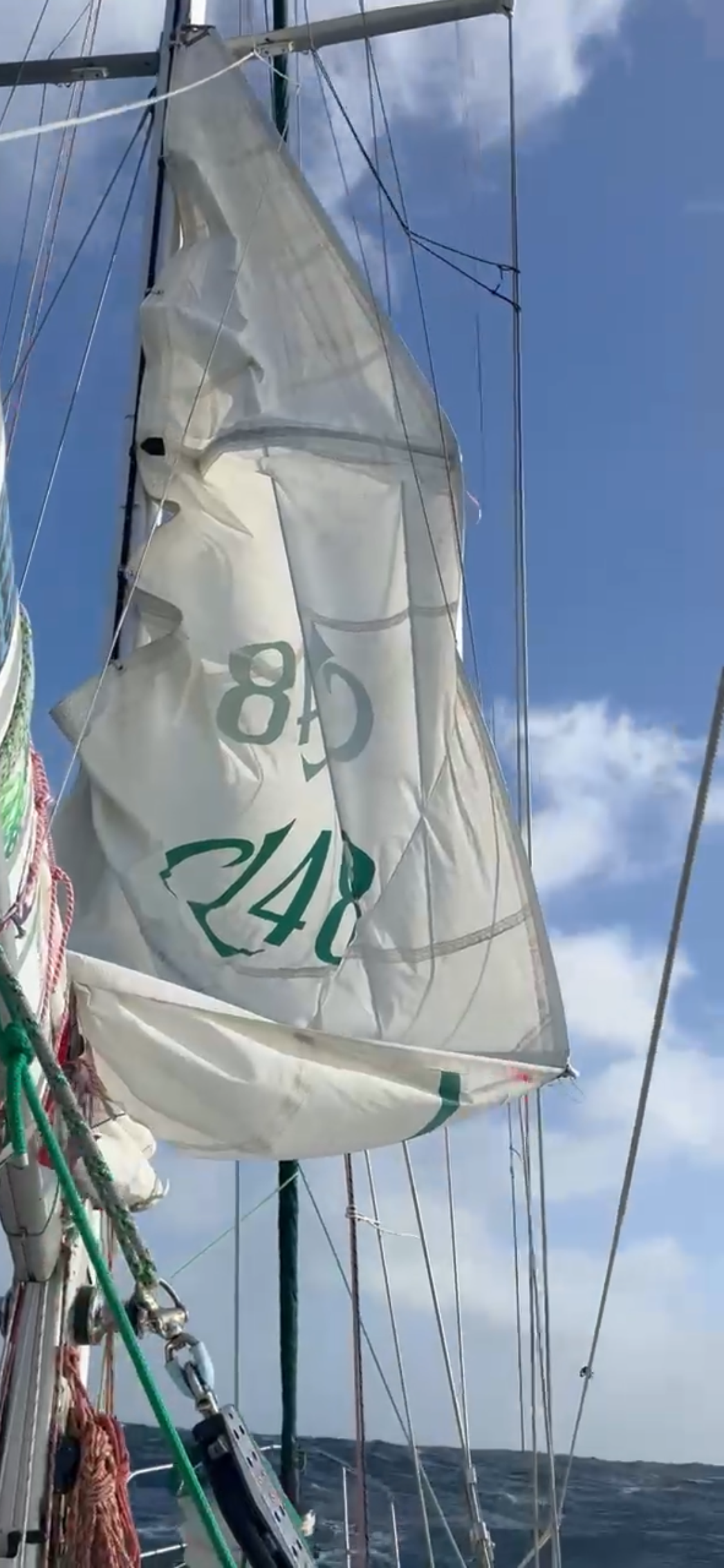
I didn’t think much of it would survive until morning.
At first light, as Mark and I rotated watches, the sail looked remarkably unchanged. Maybe a couple of broken battens, we figured.
I decided to film Mark giving an update on our situation. The storm had eased to around 30 knots, though the seas were still steep and wild. One Ocean had carried us safely through the night. The storm boards had done their job as wave after wave slammed into them and thundered against the hull.
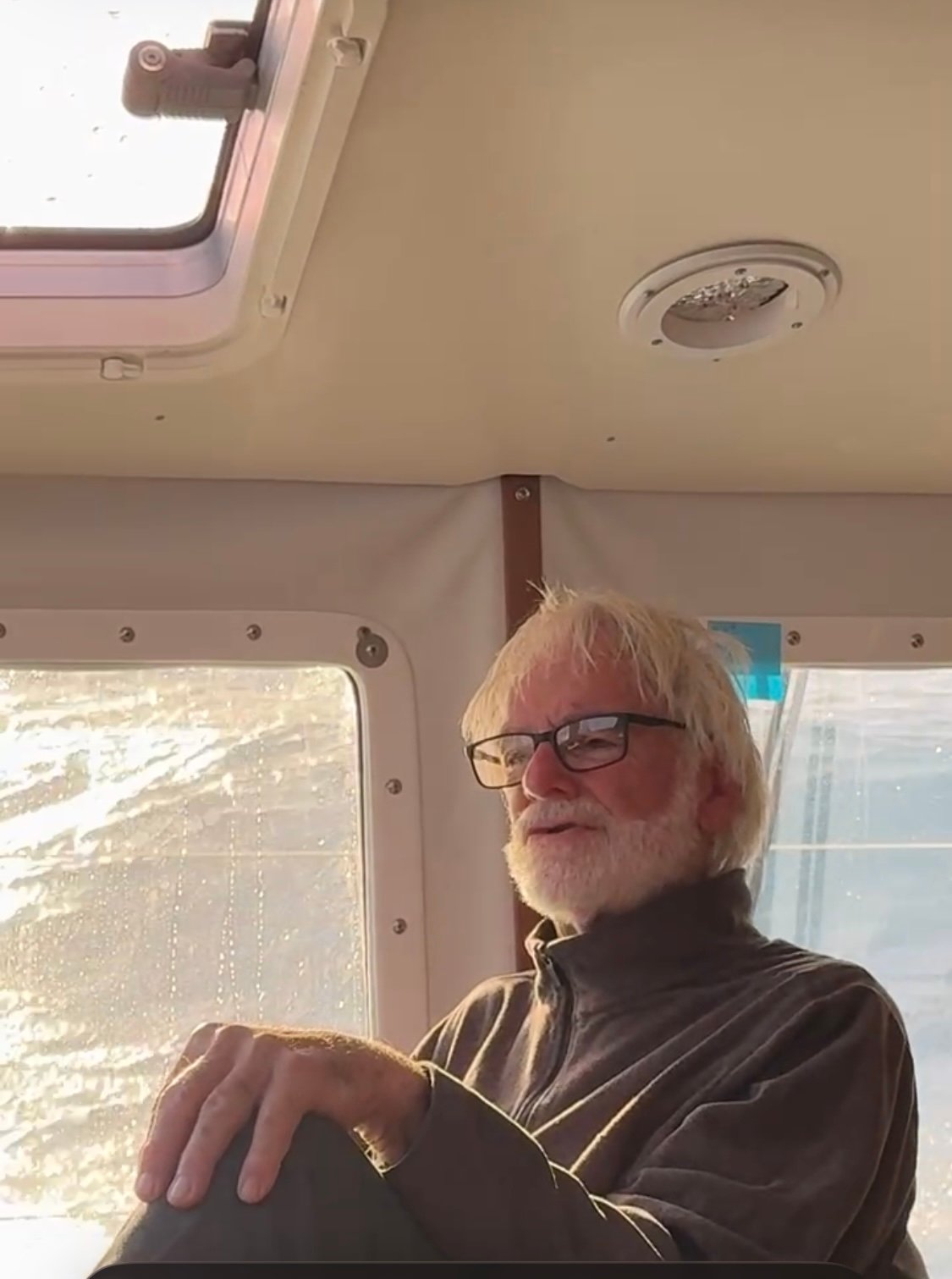
Just after we finished filming, another wave crashed into the cockpit, and you could hear water sloshing before it drained away.
I had been angry with Mark for not bringing the mainsail down the night before. But truly, it didn’t matter anymore.
It was one decision among thousands he had made throughout this expedition, and I trusted his instincts and judgment more than almost anyone I know. He wasn’t happy with the call either, and he admitted that openly. By the time I had suggested we take action, though, he wondered if it was already too late. My anger lasted only a few minutes out there at the mast in the darkness, because deep down, I had wondered that too.
But that’s the reality of life at sea — sometimes your decisions work out, and sometimes they don’t.
What matters is not perfection. It’s the willingness to assess, adapt, communicate, and keep moving forward without becoming paralyzed by fear.
That may be one of the greatest lessons Mark has taught me.
Think ahead. Three steps ahead if possible. Make the decision. Work methodically. Prioritize safety. Then adapt again when the ocean changes the equation.
And maybe that’s what makes us such a strong team.
The decisions onboard come from experience, trust, communication, and safety. We make them together.
There’s a camaraderie between the three of us, built on deep respect.
Mark has sailed more miles than anyone I know. He’s completely at home out here, with a mastery that comes from years of experience and trust — in both the boat and the crew.
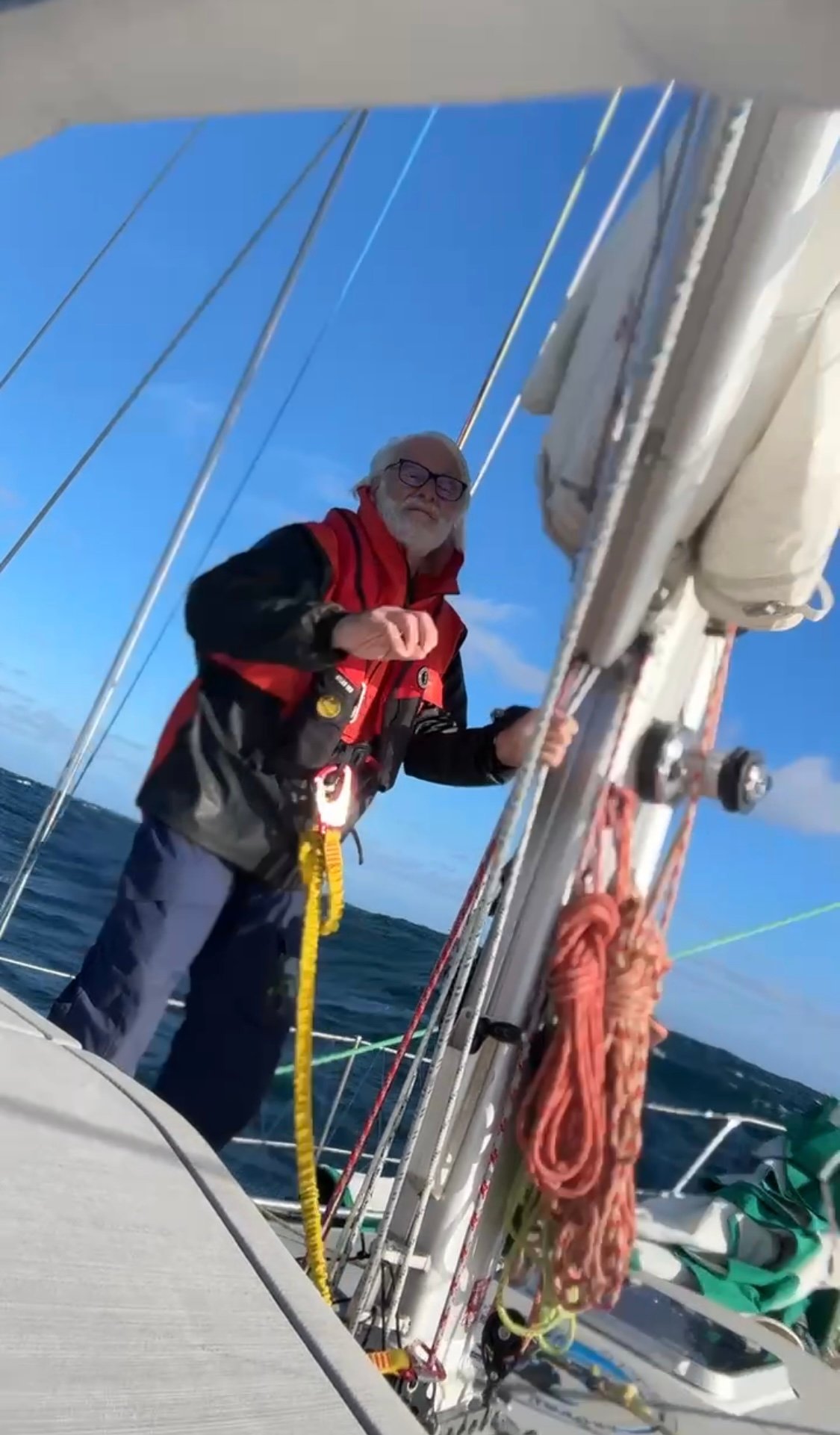
But more importantly, he’s an incredible teacher - a legend some might say. Yes, he was called that when we met a race director in Concon, Chile who recognized him.
I’ve learned that good decisions are not always perfect ones — they are thoughtful, grounded, and made with the information and instincts you have at that moment. I’ve learned to trust myself. Out here, there’s no room to hide from hesitation, fear, or self-doubt. The ocean exposes all of it. Mark has taught me that confidence is not about always being right; it’s about being willing to make the call, take responsibility for it, and adjust when conditions change. And to remember that whatever I learned from today, forget it all because tomorrow will be different.