 Donate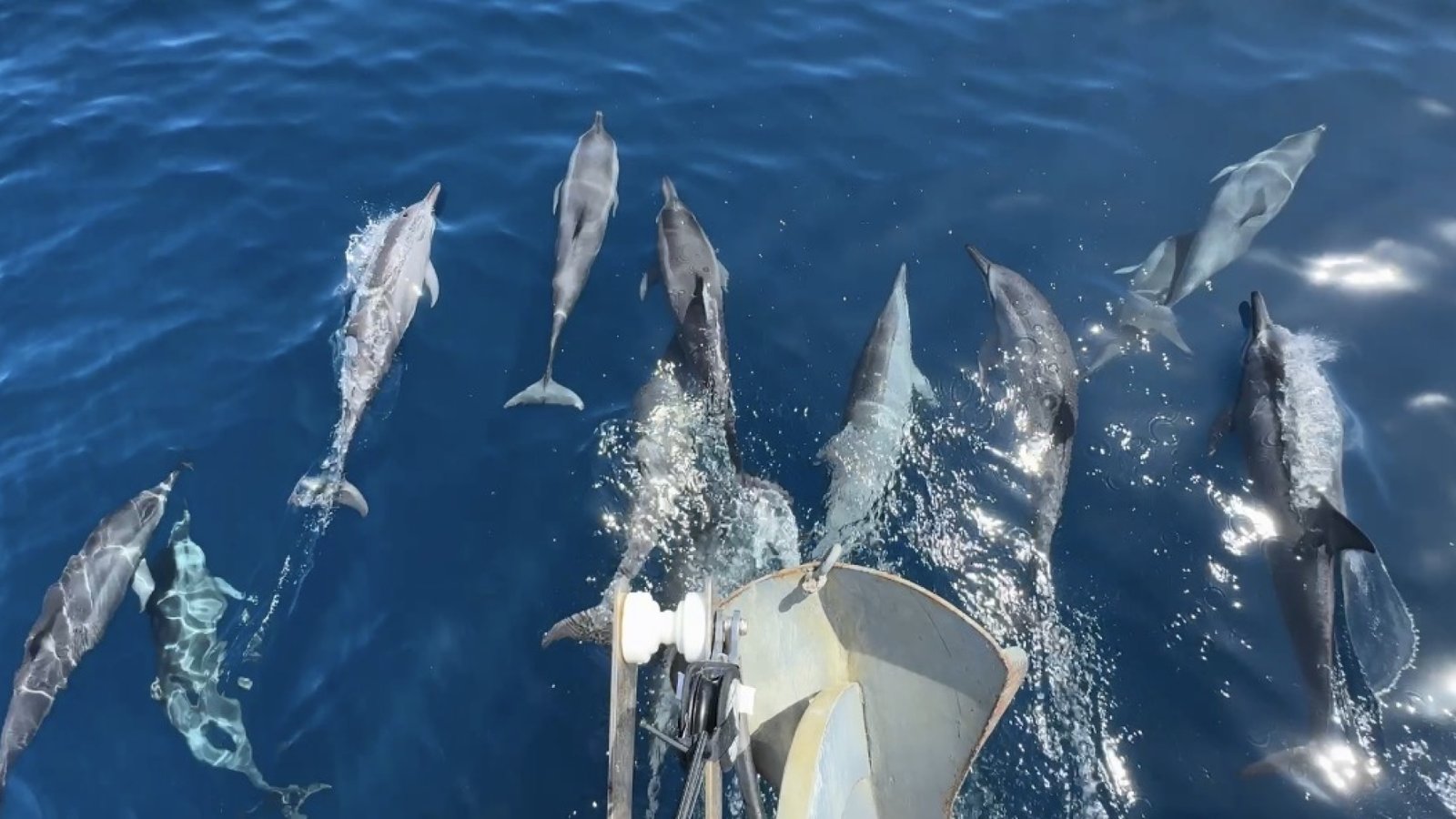
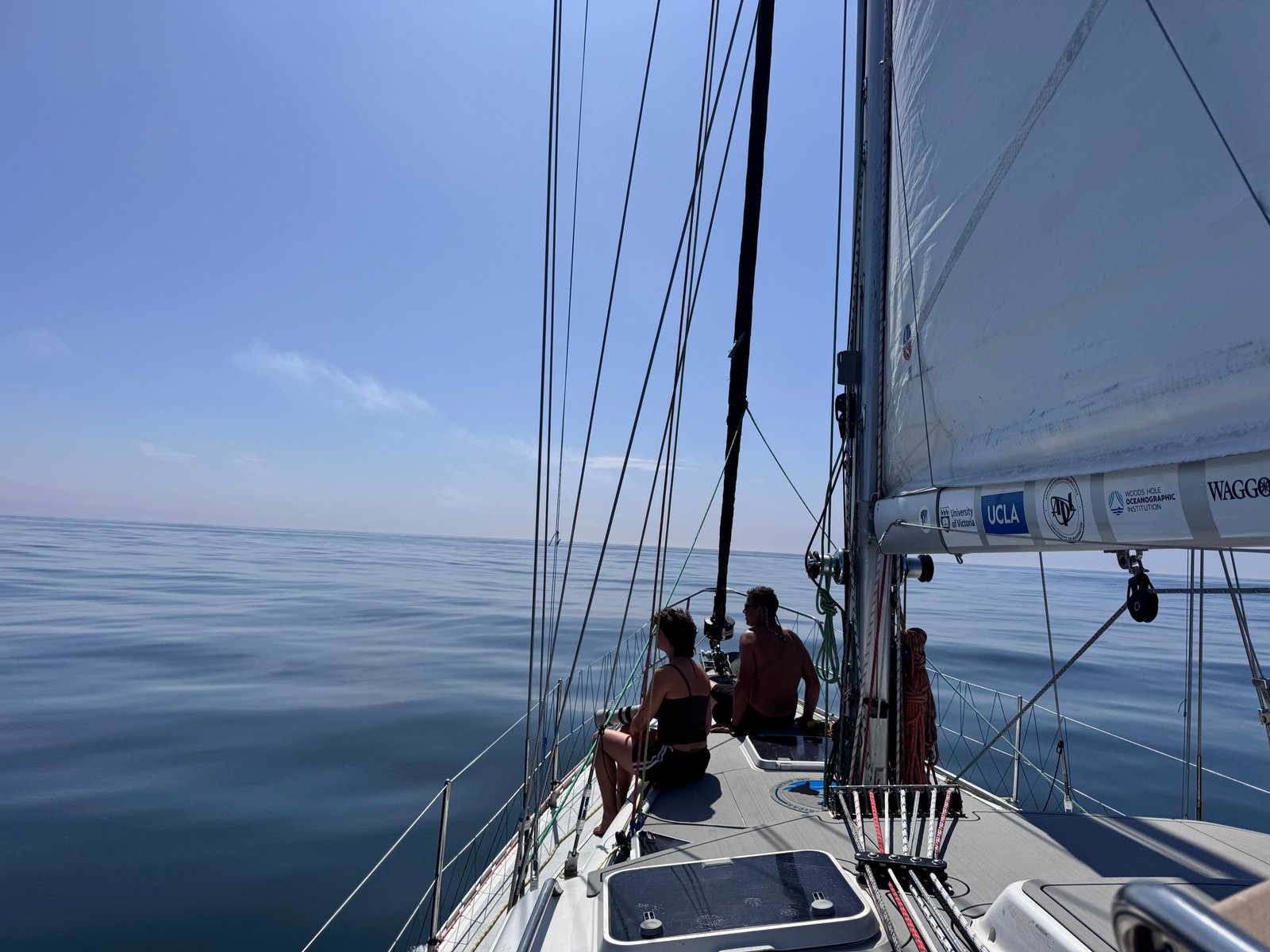
I woke this morning to calm waters—the quietest and flattest I have seen in a long while on this expedition. The early morning sun burned through a layer of fog, not thick, just enough to bead dew across the deck and leave a damp chill in the air. It was my early morning watch aboard One Ocean as we headed south off the coast of Peru.
I went to the bow and sat in the stillness. A few dolphins swam off the port side while flying fish darted ahead of the boat. The view stretched for miles in every direction, with not a boat or plane in sight.
That moment carried me straight back to my childhood—back to the reason I am here, doing this work of ocean awareness. This journey isn’t only for scientists or students. It’s also for the child in me who was completely and utterly in awe, deeply connected to this vast and glorious gift: our one ocean.
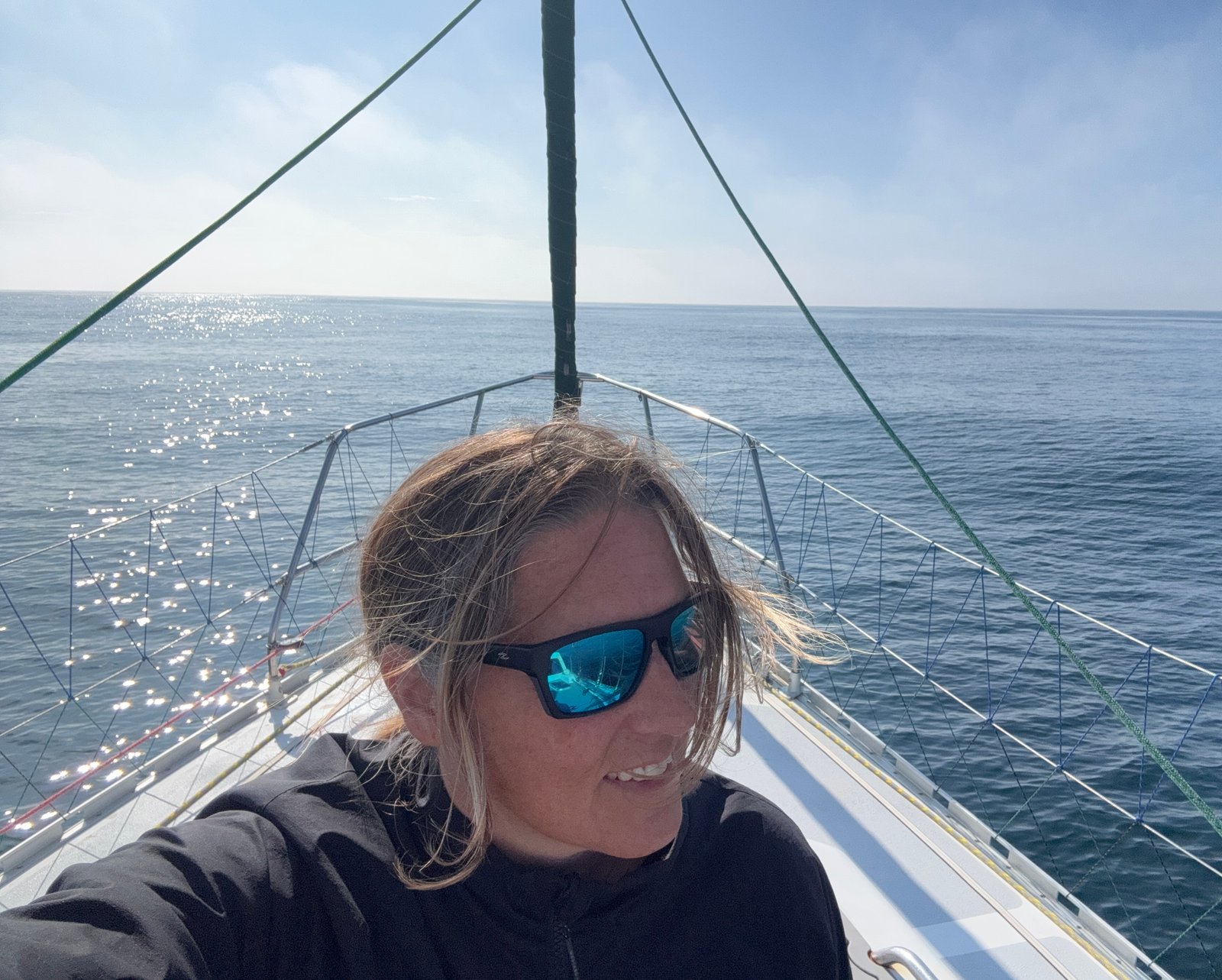
The ocean has been my playground for as long as I can remember. One of my earliest memories is seeing a sunflower sea star for the first time—it was almost as large as the swim dock I was sitting on. When I was ten, my mom put my little brother and me into sailing lessons in Deep Cove, British Columbia. The freedom and exhilaration I felt maneuvering my Laser sailboat under wind and ocean power is something I have been chasing ever since.
Interesting fact: The sunflower sea star (Pycnopodia helianthoides) is a large, fast-moving, many-armed sea star once common in British Columbia’s coastal waters. Its population has been devastated by Sea Star Wasting Syndrome (SSWS).
The ocean continues to inspire awe. When I’m near it, I can’t help but scan the horizon—watching for life to surface, leap, or glide past. It’s mesmerizing. It offers hope and the promise of endless possibility.
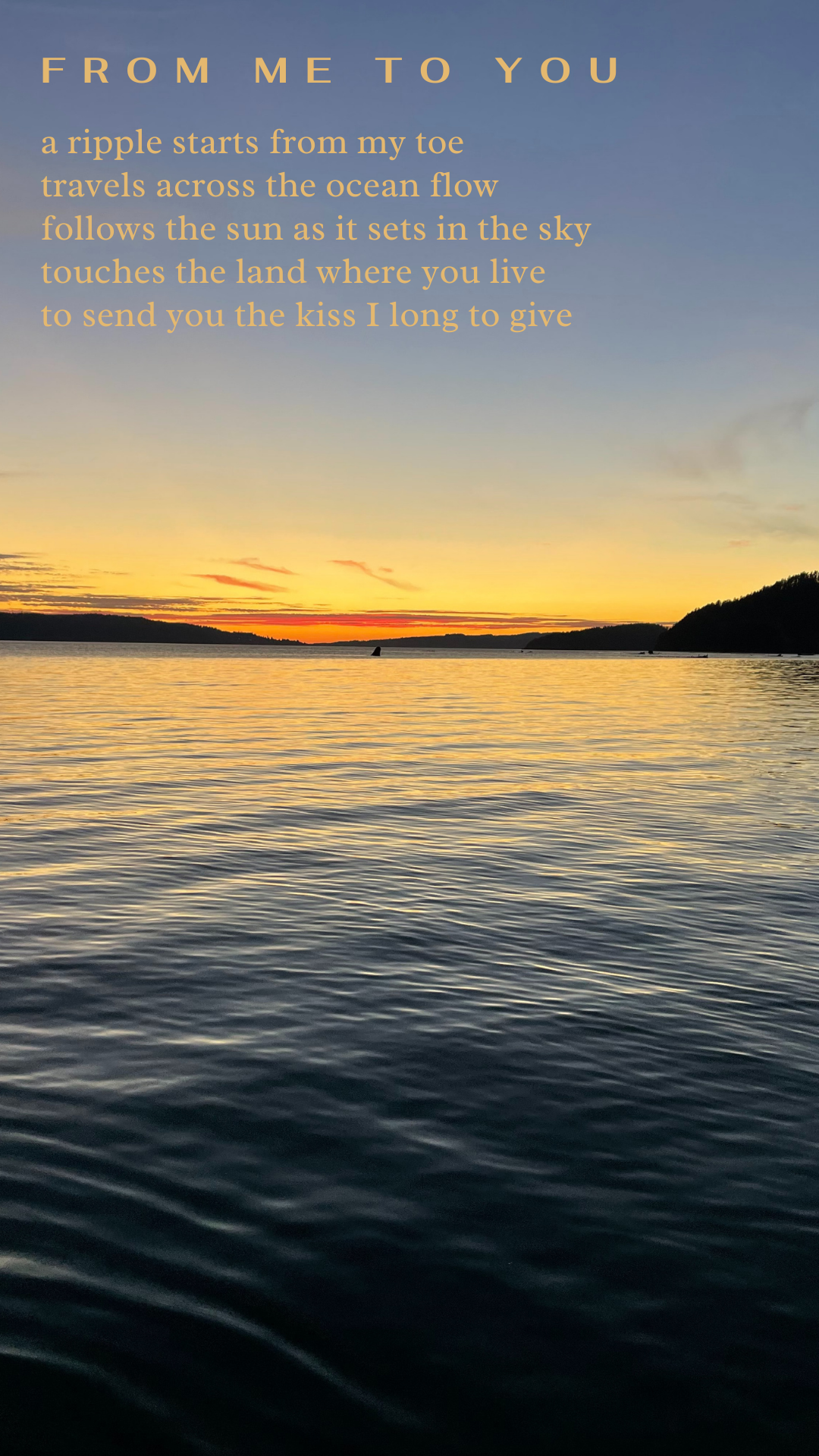
During COVID, my son was in British Columbia at university while I was across a closed border in Washington State. I would go to the ocean and blow a kiss across the water, knowing that these same currents would eventually lap at his shore.
There is a deep sense of connection that fills my soul. Yes—it’s spiritual for me. The ocean makes me feel small in the best possible way. The abundance of life just beneath the surface intrigues and humbles me—roughly 16,000 feet below us as we follow the Peru–Chile Trench while I write this. I’m endlessly curious, always wondering about the creatures I’ve seen, the mammals that surfaced, and what more lies below our boat.
Interesting fact: The Peru–Chile Trench is a deep oceanic trench in the eastern Pacific, running parallel to the coasts of Peru and Chile.
I can watch the water for hours—the shifting colors and oval patterns forming images like a living canvas. How can one not feel that something greater is at work?
I think—though I may be assuming—that many of us feel this same pull when we are near the ocean.
This connection, this love of my life, has been with me since the first moment I saw it. When we encounter a whale, a ray, or a dolphin, it awakens that same excited child in me—still fascinated, still inspired by the secrets the ocean reveals.
The more I see, the more questions I have. That curiosity never ends. I am grateful to be on this journey, bearing witness to the changing state of this breathing, mysterious, life-bearing system. And it leaves me asking: how can we be so careless with something that gives us so much—scraping it clean, taking more than we need, dumping toxins and debris into its depths?
I am not perfect. I have contributed to the problem, too. But I am learning. And I know there are countless brilliant people dedicating their lives to research—working to understand how we can do better, how we can protect what sustains all life on this planet.
As we crossed into the Humboldt Current, the ocean transformed. For over a week now, we have seen an explosion of life. This current cools surface waters through upwelling, drawing cold, nutrient-rich water from the deep and fueling some of the most productive marine ecosystems on Earth.
Over our 27,000-nautical-mile journey, we have sailed more than 12,600 nautical miles through warmer waters—and I hate to admit how little wildlife we saw along much of that stretch. From Halifax to Panama, sea temperatures exceeded 90°F (32°C). It’s hard not to believe heat plays a role; those are temperatures that could cook seafood.
Crossing the Humboldt, we watched the ocean temperature drop from 89°F to 81°F—and life returned.
Interesting fact: The Humboldt Current flows north along the western coast of South America bringing cold water from the deep ocean (upwelling), bringing vital nutrients that fuel phytoplankton, the base of a rich food web.
I know it’s easy to feel overwhelmed by the scale of the problem—by questions of who, how, and where to help. But one thing is certain: if we do nothing, we achieve nothing. That outcome is guaranteed.
I saw a quote recently:
“I’m just one person—what can I do?” said eight billion people.
And I get it. The news is overwhelmingly dire and the problems are vast. But what we can do is learn and change. Pick one small thing. Start there. Stay with it. Eight billion people, one small step each—that could be powerful.
I’m not just sailing for research and education. I’m here to protect my spiritual connection, my food source, my playground, my inspiration, and my greatest love. She is not breathing easily. Her temperature is rising. She needs care—now.
We are one island—North and South America—encircled by one ocean. Together, we can make a difference.