 Donate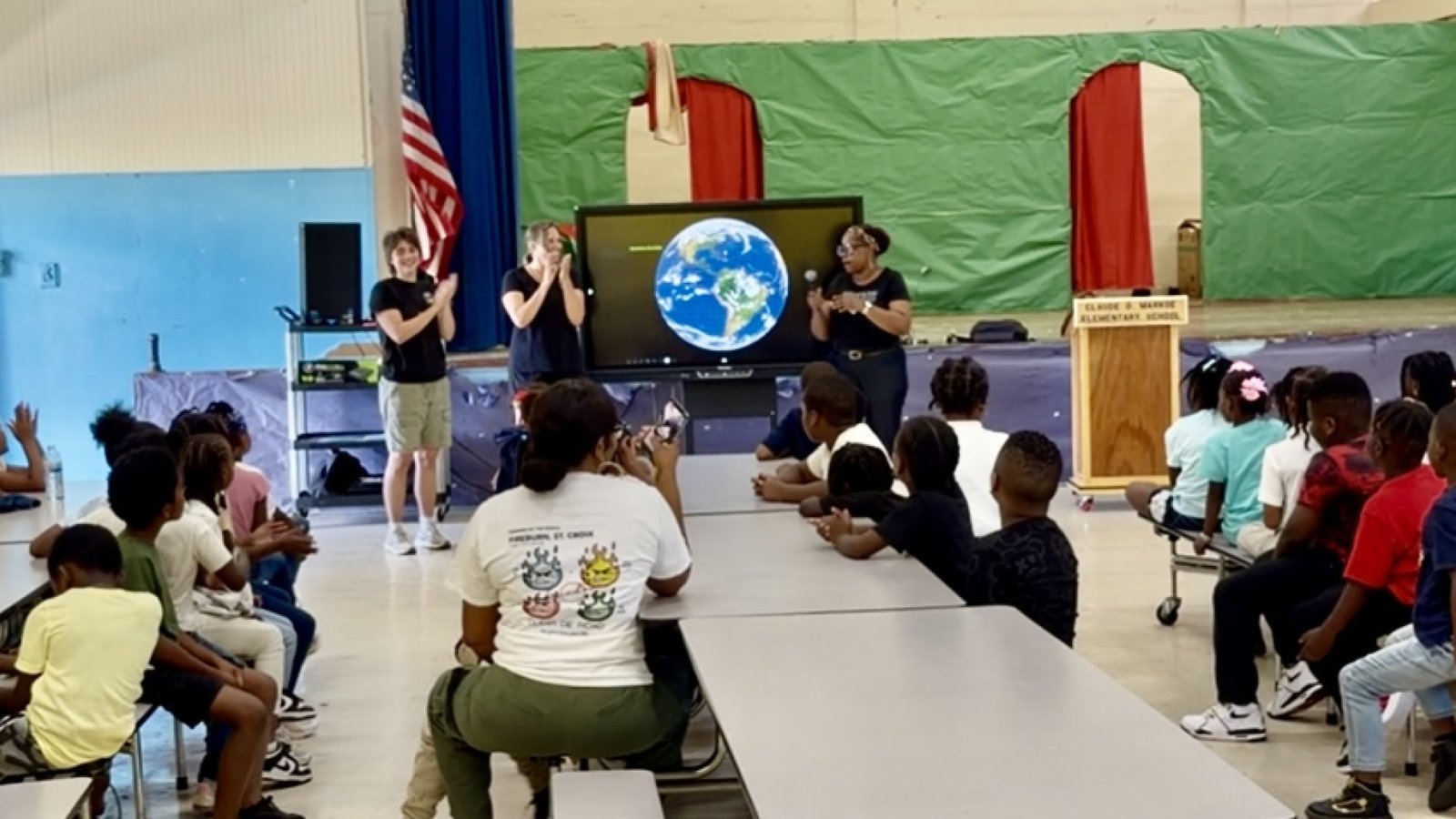
When we made the decision to turn right and transit the Panama Canal, we based it on three factors: finances, weather, and time. The weather was against us and we were storm-weary. We weren’t going to make Uruguay for Christmas, and our funds were nearly gone. So we turned toward the Canal to keep our options open. Once through to the west side, we would have three possible routes—south, straight ahead, or north. That decision could wait.
What we hadn’t fully accounted for—or given ourselves enough credit for—was the project itself: our research, education, and outreach.
While crossing the Caribbean Sea, we learned more about the significance of the data we were collecting during a live classroom with Dr. Andy Jessup from the University of Washington’s Applied Physics Lab. He explained our research on ocean surface heat flux. The temperature of the ocean right at the surface is usually a few tenths of a degree Celsius (0.2–0.5°C) cooler than the bulk temperature just millimeters below. Though the difference seems small, on a global scale it plays an important role in estimating how much CO₂ the ocean absorbs.
This phenomenon—known as the “cool skin effect”—occurs because heat typically flows from the ocean to the atmosphere. One Ocean is uniquely equipped to study this. An infrared sea surface temperature sensor is mounted at the top of the mast, while another temperature sensor was installed through the hull just below the waterline. Together, these instruments allow us to measure the temperature difference continuously.
We’ve now collected uninterrupted data for over 12,000 miles—data that can be compared directly to measurements from the 2009/10 expedition. The results have been outstanding. Arctic water temperatures alone were as much as 10 degrees warmer than they were 15 years ago. From Nova Scotia down to Panama, water temperatures hovered around 90°F—numbers we never hoped to witness.
Dr. Jessup shared this about our findings:
“No one has ever made these measurements of the bulk–skin temperature difference above a wind speed of about 15 meters per second or at these very high heat fluxes. This is a unique set of data that I’ve never seen anything like. It’s very exciting—because no one has ever made measurements at these wind speeds, and we would never have seen this data if One Ocean hadn’t gone through that storm.”
Yes—that storm. The storm of storms. It has taken me until just the past few days for my tailbone to heal, my PTSD to calm, and my love for sailing to fully revive. To know that what we endured contributed to groundbreaking science makes it meaningful in a way I couldn’t have imagined. Dr. Jessup will be writing a scientific paper on this data, and I’m deeply grateful that something lasting and valuable came from such a difficult experience.
To learn more, you can watch Andy’s incredible classroom here:
https://www.youtube.com/live/qt1BItb-4EA
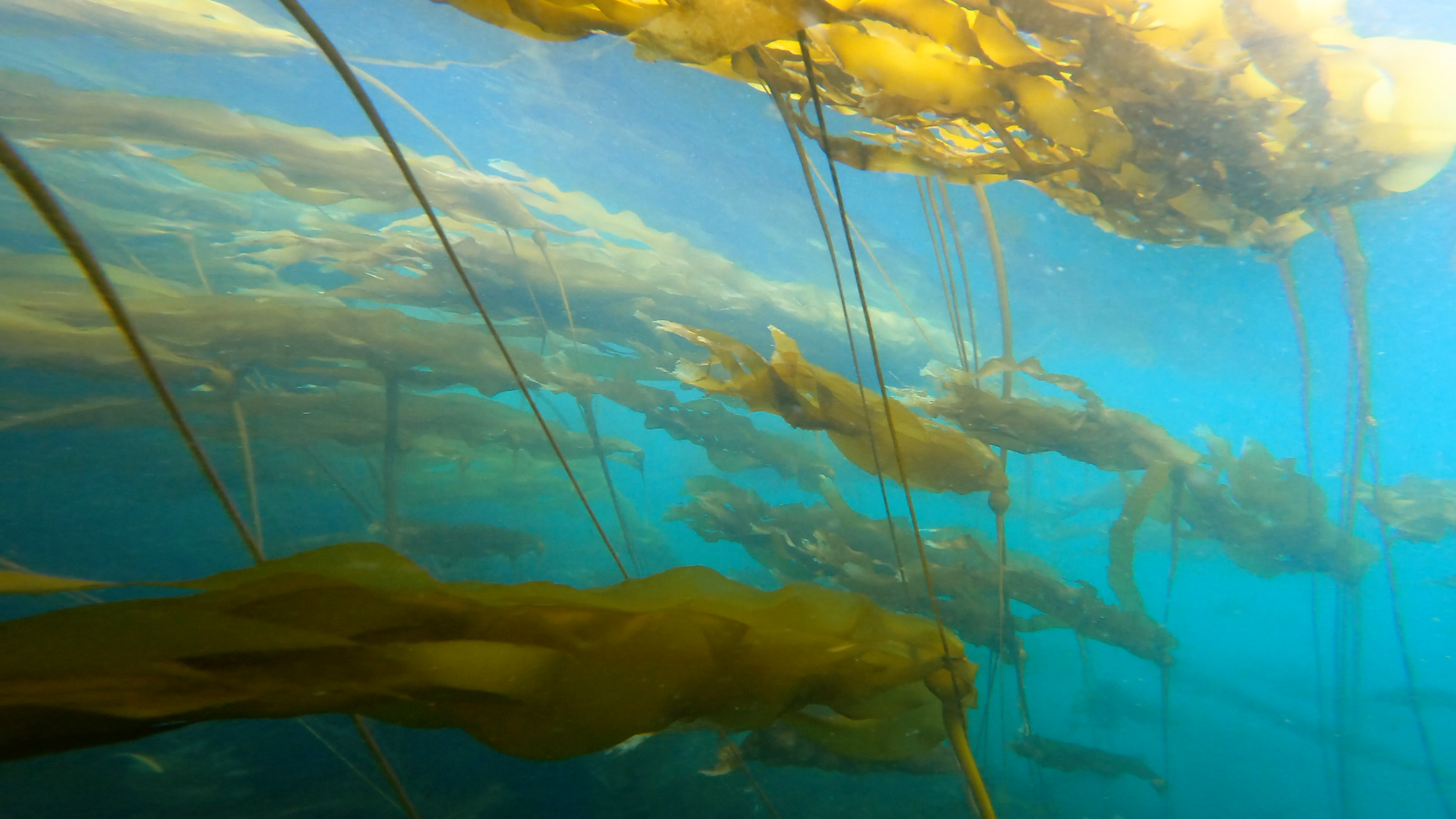
That same week, we received news from Grace. She met with Dr. Maycira Costa at the University of Victoria, who confirmed that the kelp data we collected is not only first-rate, but also the first of its kind—research that has never been done before. Kelp forests are among Earth’s most dynamic and productive marine ecosystems, created by giant kelp (Macrocystis pyrifera) and bull kelp (Nereocystis luetkeana). They are also integral to the marine carbon cycle, boasting primary production rates comparable to those of tropical rainforests. Kelp is highly vulnerable to changes in ocean conditions, such as rising temperatures and increased sea urchin populations. Monitoring kelp health helps researchers understand the overall health of the marine system.
Throughout the expedition, in partnership with Sailors for the Sea, we’ve also been deploying MicroSWIFT buoys and working closely with Dr. Jim Thomson. His research focuses on waves, turbulence, and ocean–atmosphere interactions, including in polar regions. Each buoy provides over five weeks of continuous, real-time data on waves, wind, turbulence, and currents.
Dr. Thomson shared:
“The microSWIFT buoy data gave us insight into patterns of surface waves and temperature, both of which affect ocean–atmosphere exchange. The collaboration with AtA allows us to collect data in regions rarely accessed with direct measurements. Further, the provision of real-time data via satellite telemetry can assist in the safe navigation and operation of vessels at sea.”
We’ve also continued our partnership with BC Whales, contributing all whale sightings and identification data to their research database. Their extensive research into whale habitats has already helped inform changes to shipping routes in Canada and the United States, including adjusted lanes and reduced speed limits for large vessels to help mitigate the frequency and severity of whale strikes. With increasing interest in Arctic shipping channels this data is incredibly important, and collaboration with vessels on the water is vital.
Grace—our marine biologist—has been on and off the boat due to seasickness and school, but she has never stopped working. She remains deeply connected with our scientists, reviewing data, transcribing research, and transforming complex science into classrooms and videos for learners of all ages. The volume of data we’ve collected is enormous, and her ability to translate it into meaningful education is nothing short of incredible.
Along the way, we’ve met many scientists who have stepped forward with their own research and data, all of which will be shared in our classrooms throughout 2026. Our scientific collaborators are not only sharing information with one another, but with students worldwide—on a truly global scale.
I say “global” because our education platform has reached students all over the world. Through our education partner, Exploring by the Seat of Your Pants with Joe Grabowski, we’ve hosted live classrooms that connect students directly with scientists and explorers. Since 2015, this nonprofit has facilitated over 4,500 live lessons, reaching more than 1.5 million students across 113 countries. Every session is recorded and made freely available on YouTube.
It’s been an incredible privilege to be part of this. Thousands of students are now watching our classrooms around the world, and the inspiration goes both ways.

Please click here to join in our 2026 online classroom schedule. (The new exciting classroom calendar will be posted soon!)
One teacher, David B. Wingard, NBCT, shared:
“As I watch the One Island One Ocean crew bobbing around while conducting a live stream for an international audience, I am amazed by your toughness and courage. My students feel like they know you from tracking your journey, watching your videos, and engaging live. I’ve never taught a class better equipped to learn from you. Their enthusiasm is contagious.”
Our in-person connections with classrooms along our route proved to be both challenging and deeply uplifting. Coordinating schedules ahead of time became nearly impossible due to the storms we encountered across North America. Tess and I spent countless hours setting up visits, only to cancel shortly thereafter because of incoming weather and unexpected delays. What stayed with us most were the teachers and schools willing to open their doors at the last minute—those were the moments when we were able to share our work face-to-face. From the very beginning, working with students has been incredibly impactful, starting with our time at the Marine Technical Institute at Skagit Valley College.
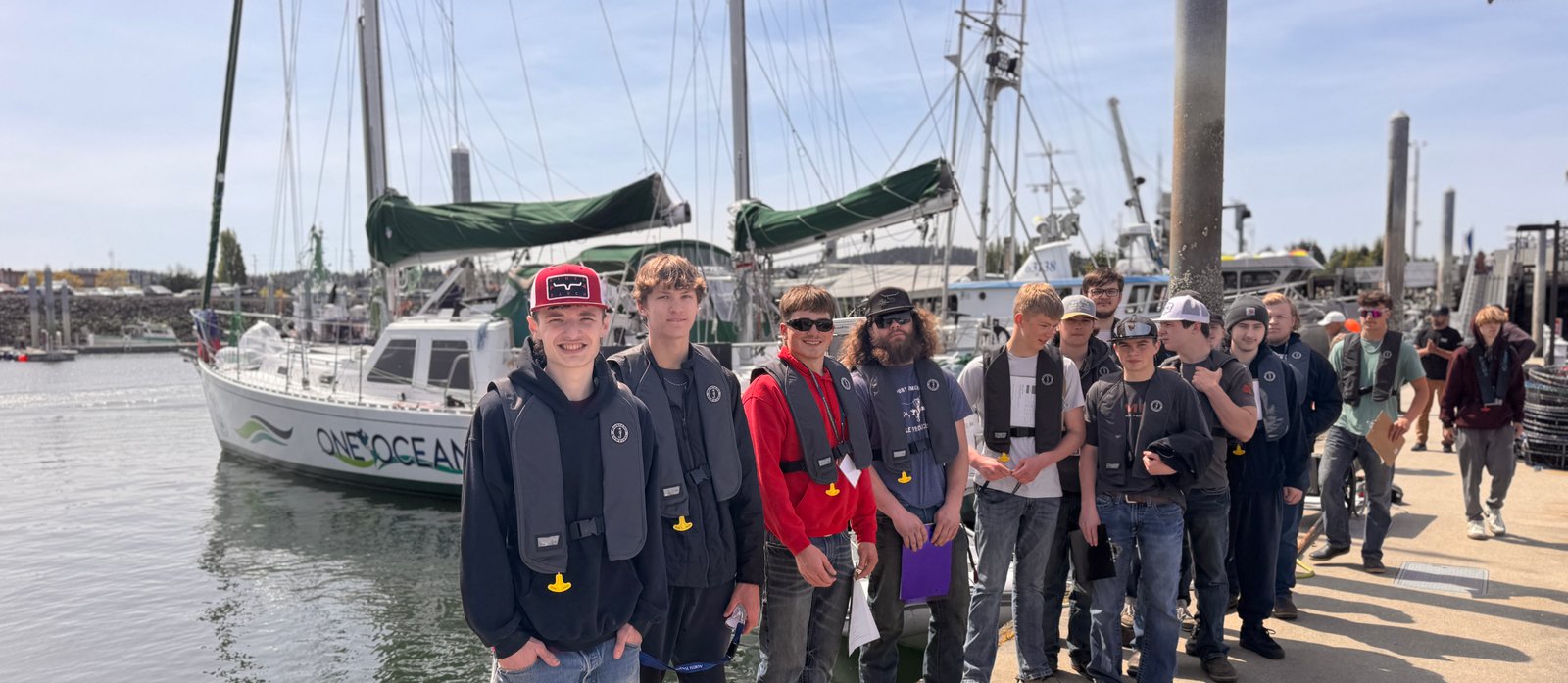
A quote from Dr. Villa, President of Skagit Valley College, Currents Magazine:
“Within this publication, we highlight uplifting stories that underscore our unwavering commitment to student success. The Around the Americas project demonstrates the innovative spirit of our Marine Technology students and faculty.”
And then there’s our social media and outreach. Tess—what can I say? She is knocking it out of the park. I chose Tess to be part of the team not only because she’s a sailor, but because of her deep passion for the ocean and her ability to turn research into stories people can connect with. Together, Tess and Grace take complex science and make it accessible, engaging, and even fun. Honestly, if I can understand the science now, anyone can.
Lee O’Neill shared this:
“I am loosely related to Tess and have been following this unbelievable trip. I know that you are each going to be strong advocates for climate awareness and Mother Earth. So proud of you all.”
At the start of this journey, Mark Schrader made three things clear. First, he wanted to inspire at least one young person to become an ocean steward. Check. That happened the moment Grace and Tess came aboard—and they’ve since taken the reins in ways that exceed anything we imagined.
Second, the expedition needed a purpose through meaningful research. Check. Vital data has been collected that will have a long-lasting impact within the scientific community.
Third, he didn’t want to go into deep debt like the 2009/10 expedition. This one… I haven’t quite accomplished yet, but thanks to all of you, we’ve secured about two-thirds of the needed funding, and we are deeply grateful. This has been a true grassroots effort, especially after several grants were withdrawn just before departure due to the current political climate in the United States.
While this expedition has been operating on a far smaller budget than the 2009/10 project, we still need to raise about $320,000.
Finances were a major consideration in possibly heading north after the Canal. But after everything we’ve endured, everything we’ve learned, the data collected, and the explosive growth of our outreach—well, we’re not stopping now.
I have never felt more inspired, or more personally impacted, by climate change and what we’ve witnessed firsthand. I feel rested, reinvigorated, and ready to continue. This work—this expedition, this research, your research—proves how vital education, connection, and collaboration are. Now more than ever, the next generation is counting on us.
In hindsight, we were shortsighted to frame our decisions only around time, weather, and finances. The mission itself has filled in beautifully and grown much larger than just these three factors. Over this Christmas holiday in Panama, when we felt overwhelmed about our next steps, we were met with an outpouring of messages—love, encouragement, and belief in what we’re doing. The impact of these messages went beyond encouragement—it became fuel for our fire. Your support has given us the courage and fortitude to carry on.

This is not just an expedition of five crew—this is a “we” project, a community we aspired and dreamed to bring together. It is the united “one island” rallying behind our “one ocean.”
For that, we thank you. Truly.
All the best in the New Year! ~ Jenn