 Donate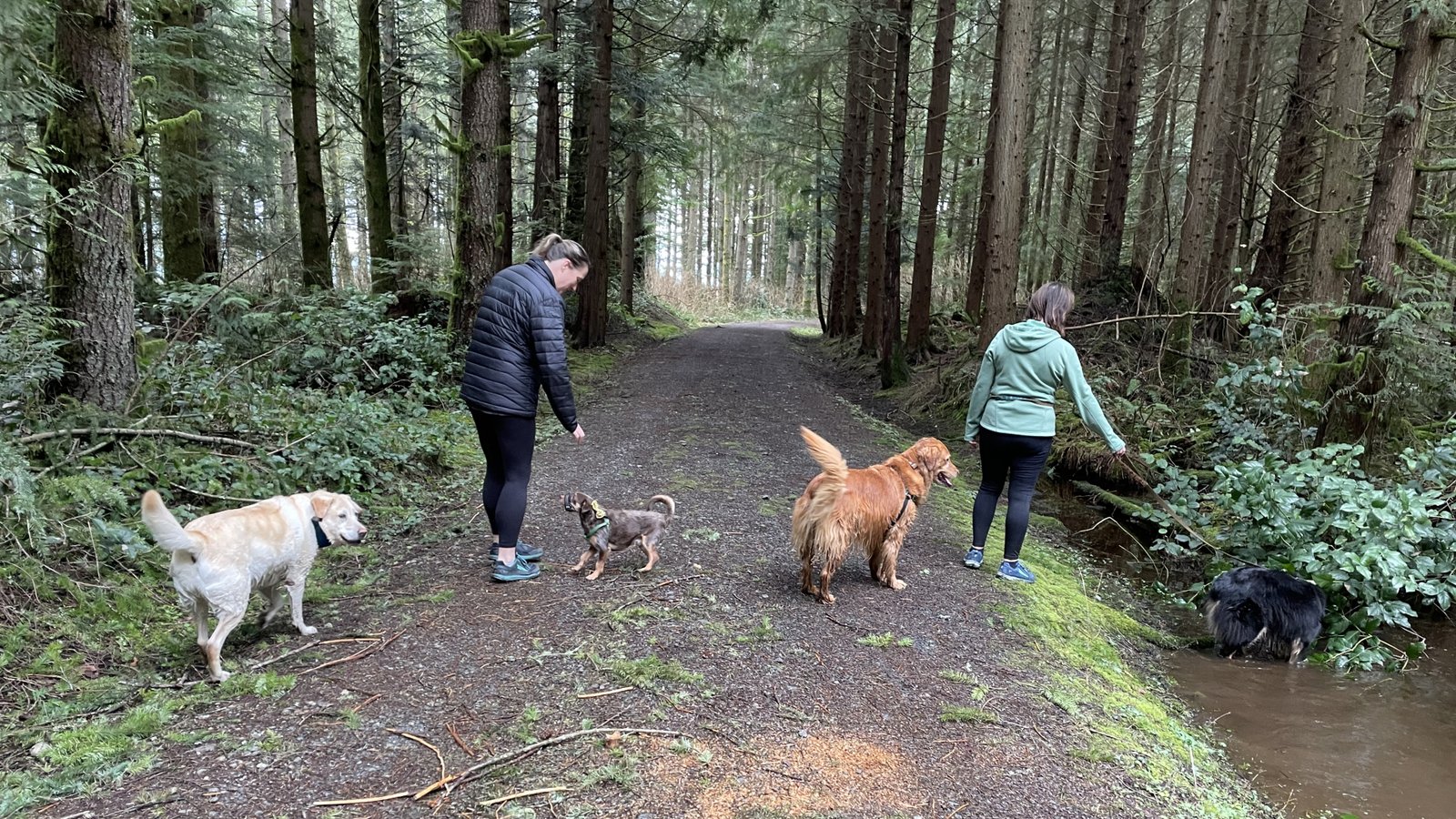
I lost my two running partners this past year. Not lost in the woods somewhere — though honestly, with our sense of direction on some runs, that wouldn’t have been entirely impossible — no unfortunately not, both of them died.
One was my best friend, Sarah.
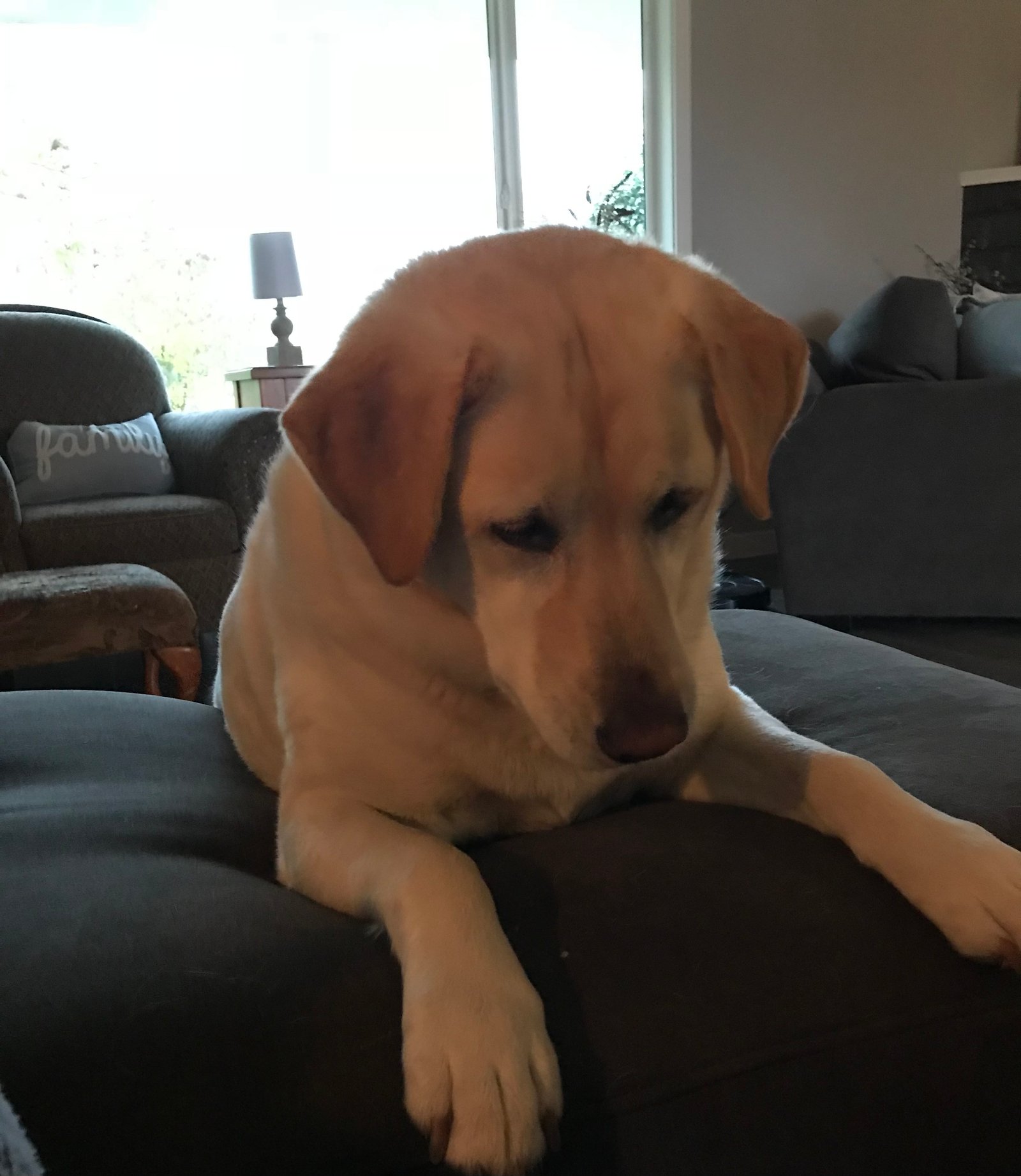
The other was my best four-legged friend, Juno.
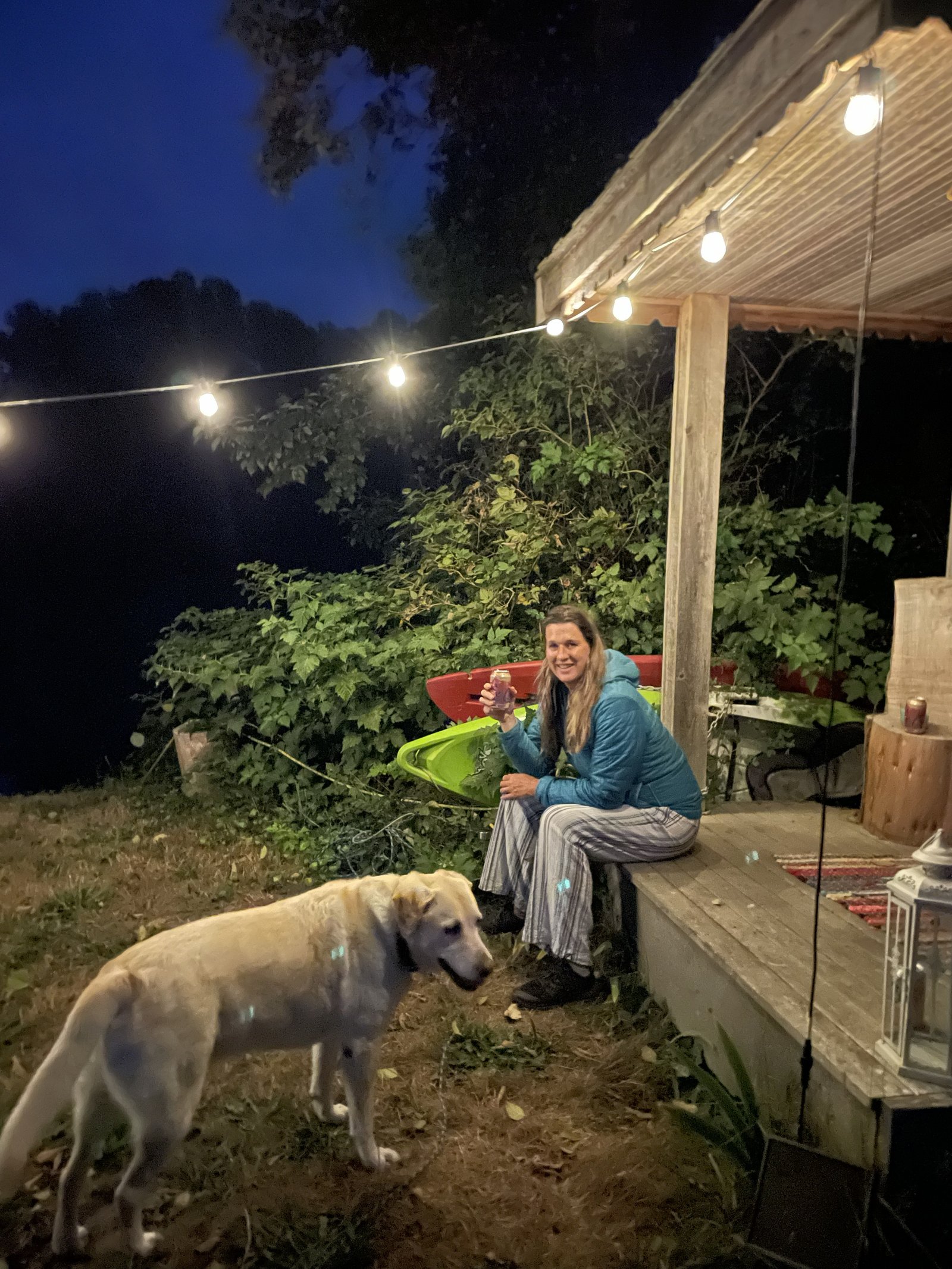
It’s hard to explain the impact of losing them both because only weeks before Sarah passed away, I left on a 27,000-nautical-mile sailing expedition around North and South America — a journey I had been intensely focused on for more than a year. There had been lists and logistics and weather routing and fundraising and preparing for life at sea. And underneath all of it, quietly growing like a storm, was grief.
Sarah was diagnosed about eight months before my departure with stage 4 lung cancer — an aggressive and uncommon form with no defined tumour and very few treatment options. She was eight years younger than me, but more like a sister than a friend. We raised our children together. We shared our joys, our heartbreaks, our adventures, our worries, and thankfully, far more laughter than tears.
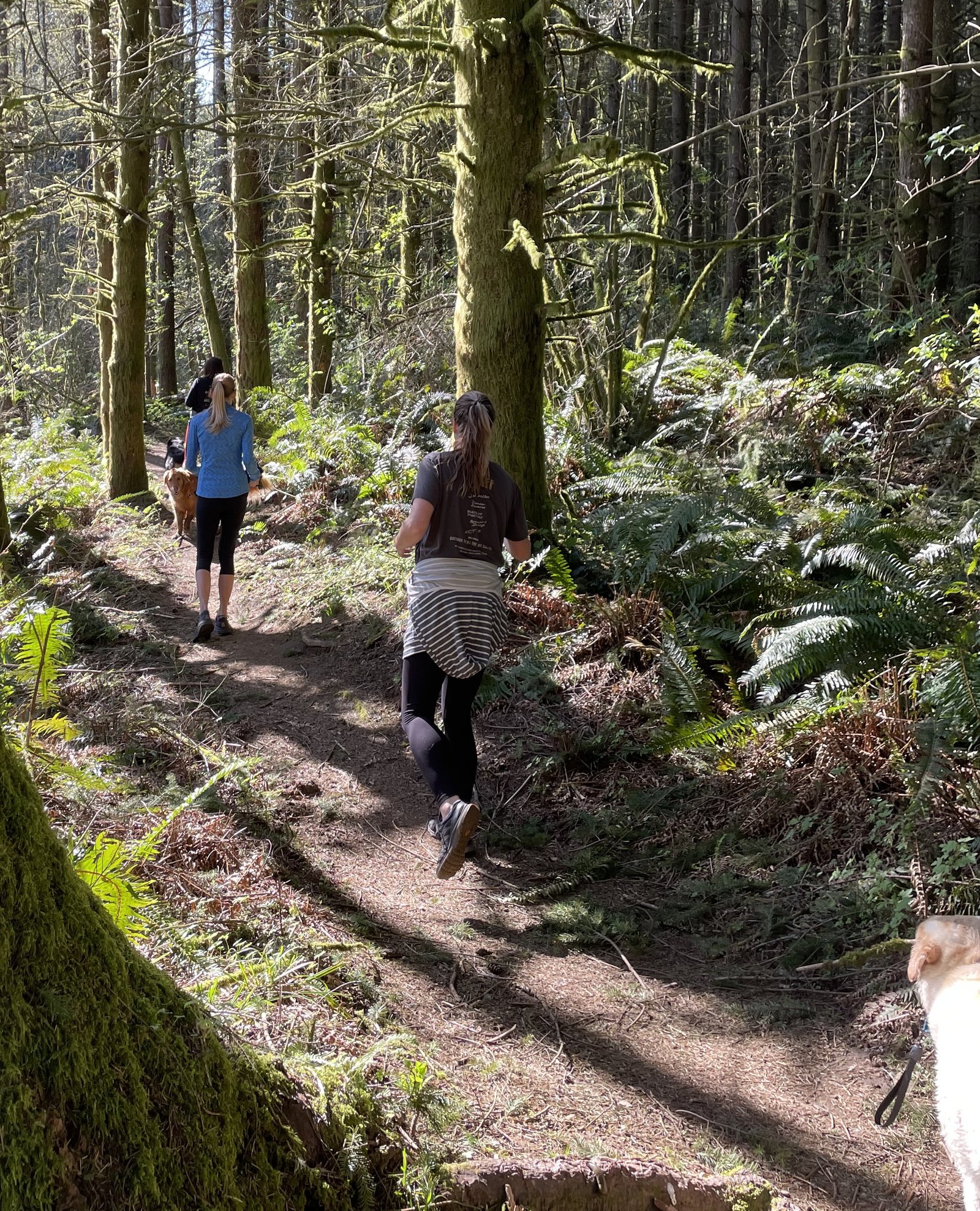
And through it all, we ran together constantly. We shared evening walks a couple nights a week. Forest runs every Saturday and Sunday morning. Usually another run squeezed in somewhere midweek because truthfully, we were each other's mental health and wellness plan.
We lived only a farm field apart on Fir Island, where the Skagit River forks and winds through rich black soil nourished by tide and rain, and where migrating snow geese arrive each winter like living clouds drifting across the valley sky. Their calls carried through the cold morning air long before dawn, echoing over flooded fields and weathered barns.
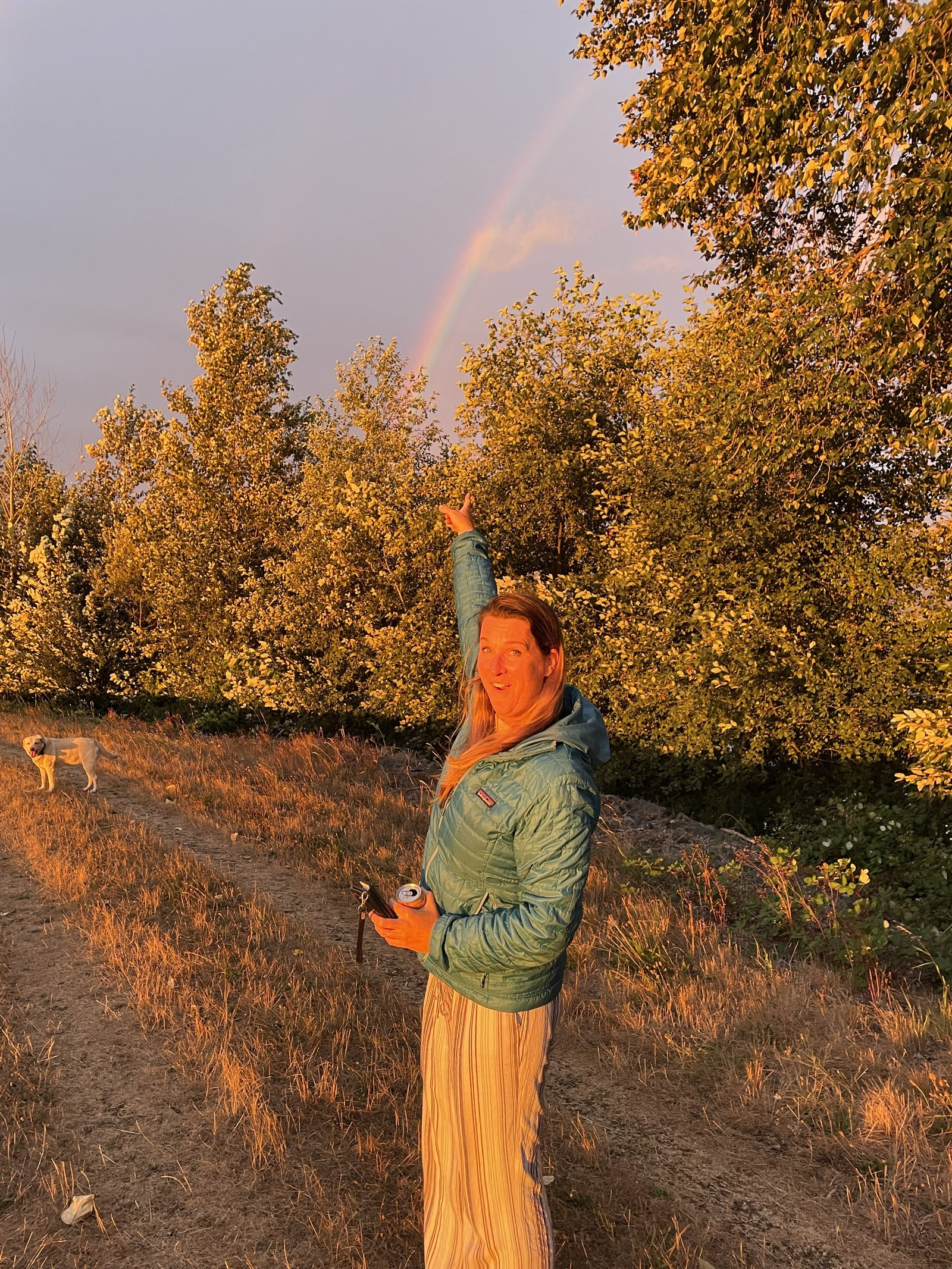
A typical Saturday began with coffee in bed while I watched the spectacular light show of dawn unfold outside my bedroom window. Cats piled on top of me, the fireplace glowing and Juno — my stout little English Lab and faithful running partner of fourteen years — snoring loudly beside the bed.
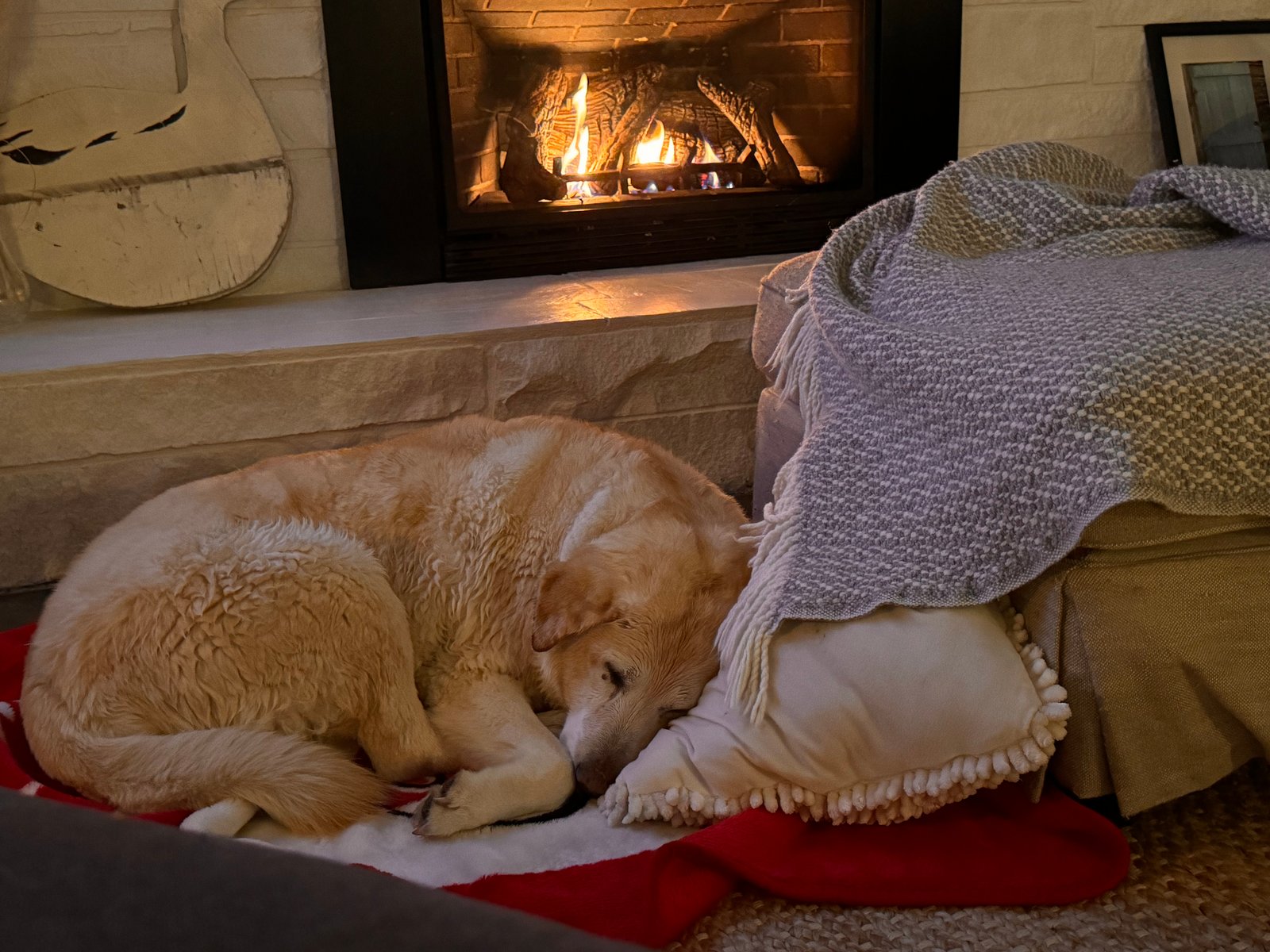
Juno had slowed down tremendously in her old age, but she still refused to let me run without her. Refused. If I tried sneaking out quietly, she would physically block the door with the determination of a nightclub bouncer.
Absolutely not, her eyes said.
You are not seeing our friends without me.
I’d quietly get dressed, trying not to wake the house, and step out into the cold fresh air of the island morning. Juno and I would walk my long driveway to the country road that cut straight through Fir Island, flat and open beneath enormous skies. The light there was never the same twice. Some mornings the valley awakened beneath a veil of silver mist or the sun would slowly spill pink and gold across the Cascades.
I could usually spot Sarah’s headlights coming from her house to mine.
By the time she pulled over, Juno would already be bouncing around the car in frantic excitement, her thick tail whipping side to side so hard it practically generated its own weather system. Inside the warm car was River — Sarah’s cheerful little mutt — ricocheting between seats saying hello to everyone at once.
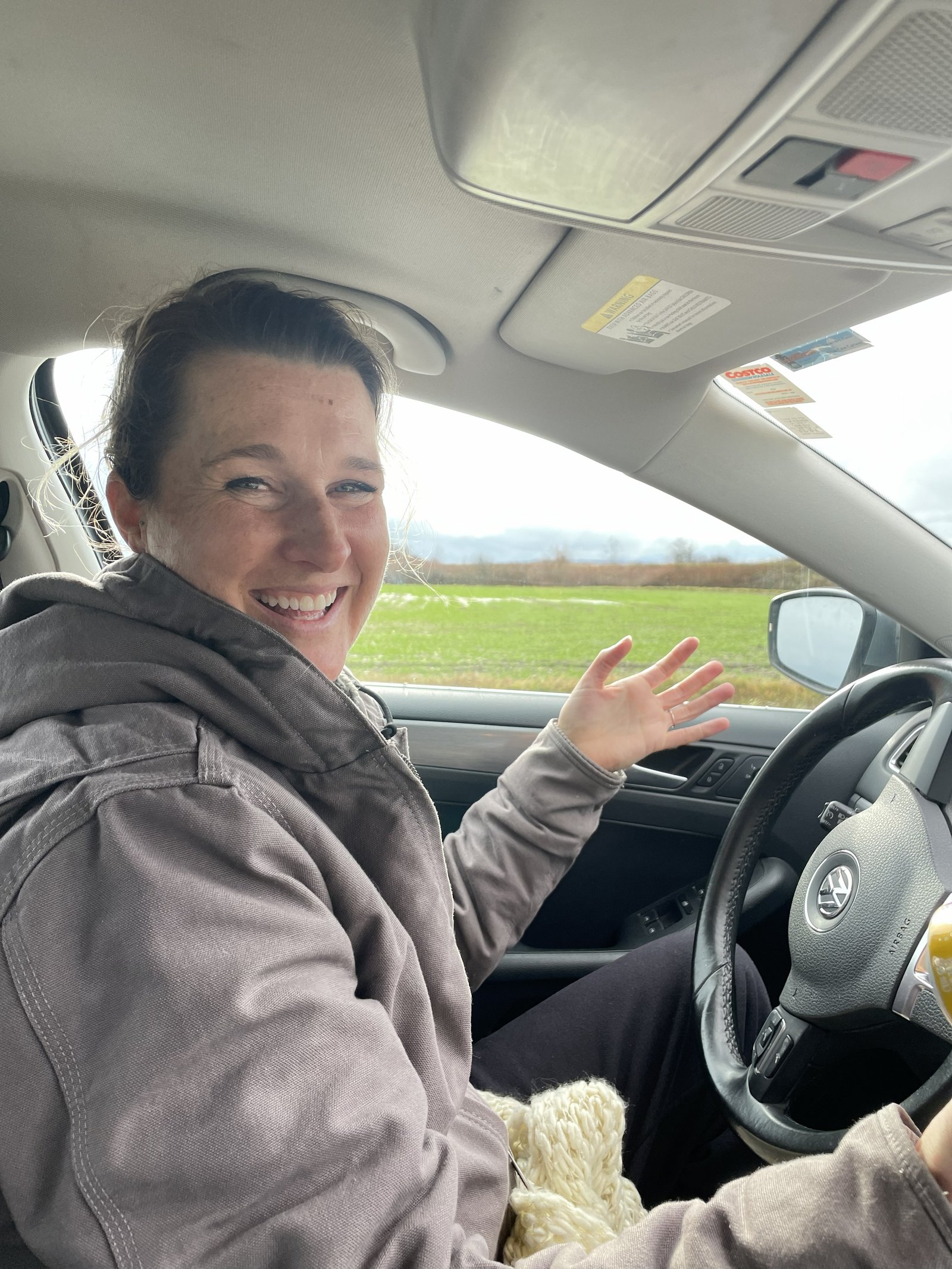
Then Sarah and I would begin talking immediately, usually mid-sentence from whatever conversation we’d left unfinished days earlier.
We’d meet the others at Stanwood Tree Farm: Emily and her two dogs, Buddy and Blakely, Bobbi and her dog, Jesse. We’d begin with a brisk walk toward the forest edge to warm up before settling into our running formation — humans and dogs alike naturally falling into their places. Juno preferred staying near the back of the pack, perfectly content trotting alongside us rather than leading the charge.
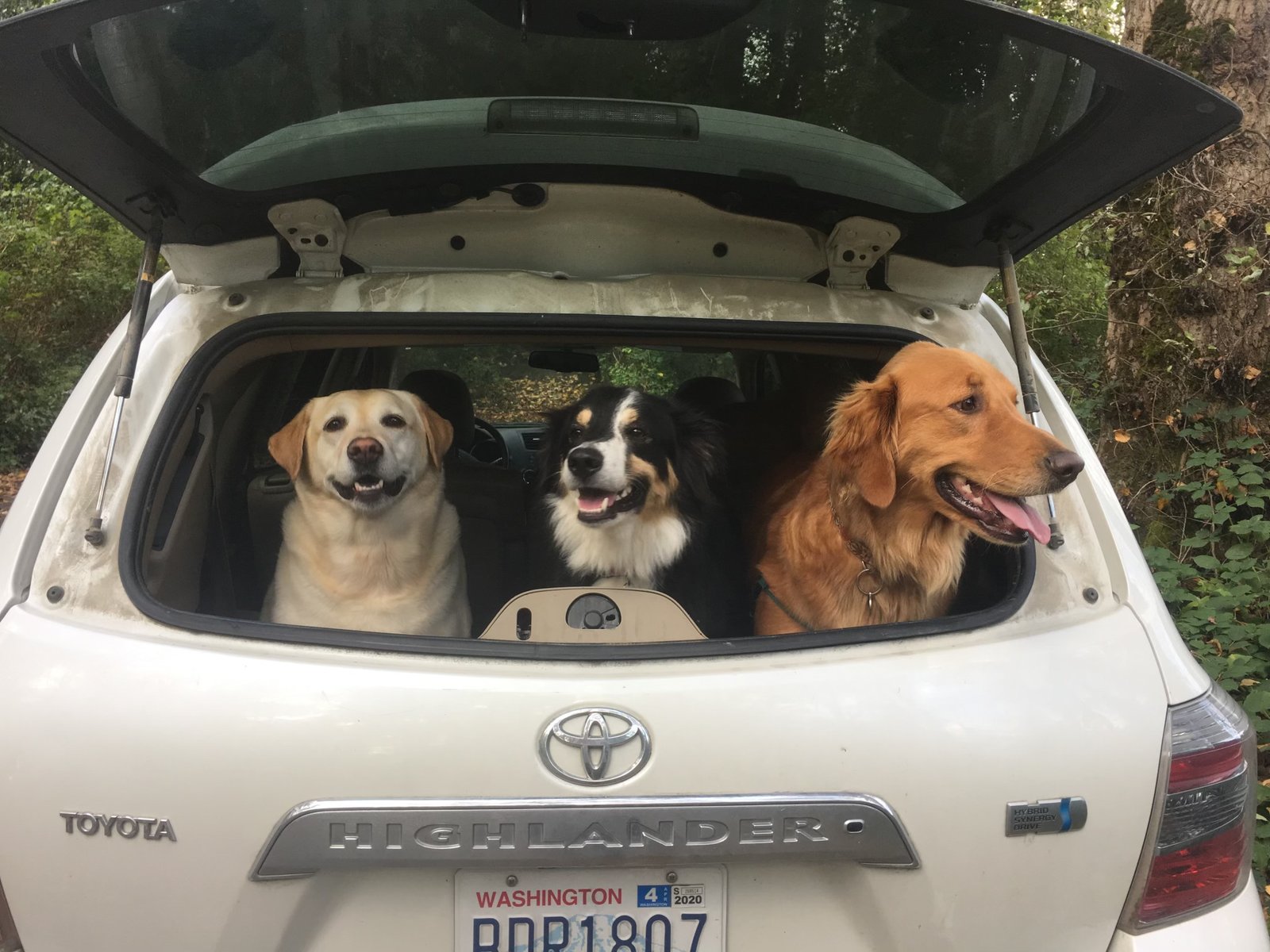
Unlike River, who treated every run like he’d just consumed six espressos.
On more than one occasion we got completely lost, which somehow always became justification for signing up for a half marathon.
“Well,” one of us would say, panting dramatically, “if we accidentally ran nine miles today, we’re basically athletes now.”
Sometimes we actually signed up. Sometimes we talked ourselves right back out of it over brunch. In fact, we once invented the “Half of a Half Marathon,” which involved running a reasonable distance followed immediately by giant breakfasts at Dad’s Diner in Anacortes.
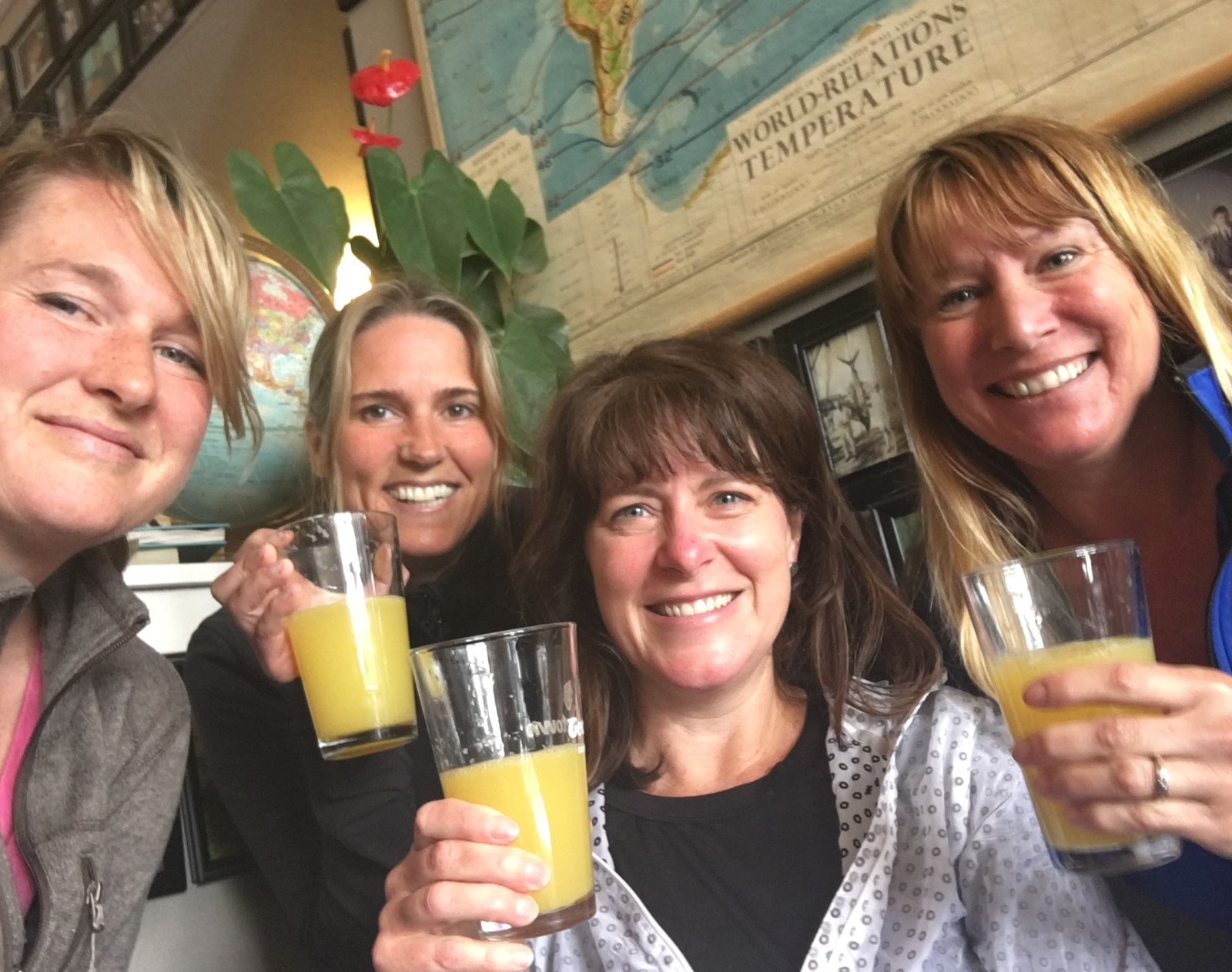
Honestly, it was our strongest athletic concept.
But those runs were never really about mileage. They were therapy sessions in running shoes. They were laughter echoing through the trees. They were honest conversations about motherhood, marriage, fear, exhaustion, dreams, and life. Sometimes we vented. Sometimes we cried. Mostly, we laughed until one of us nearly peed our pants on the trail.
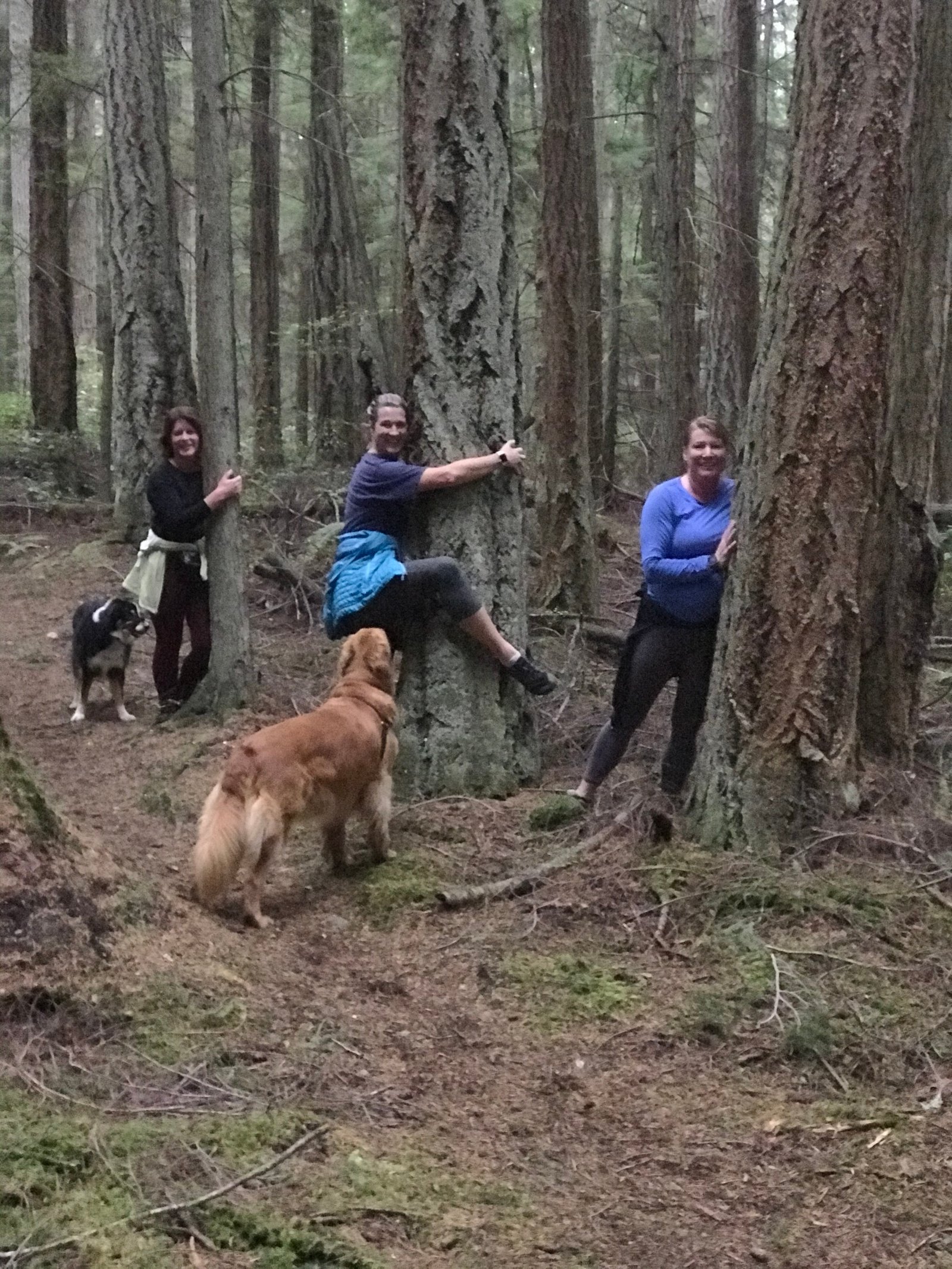
As difficult as it sometimes was to wake up before sunrise on a weekend, we never regretted going. I always came home tired but deeply alive.
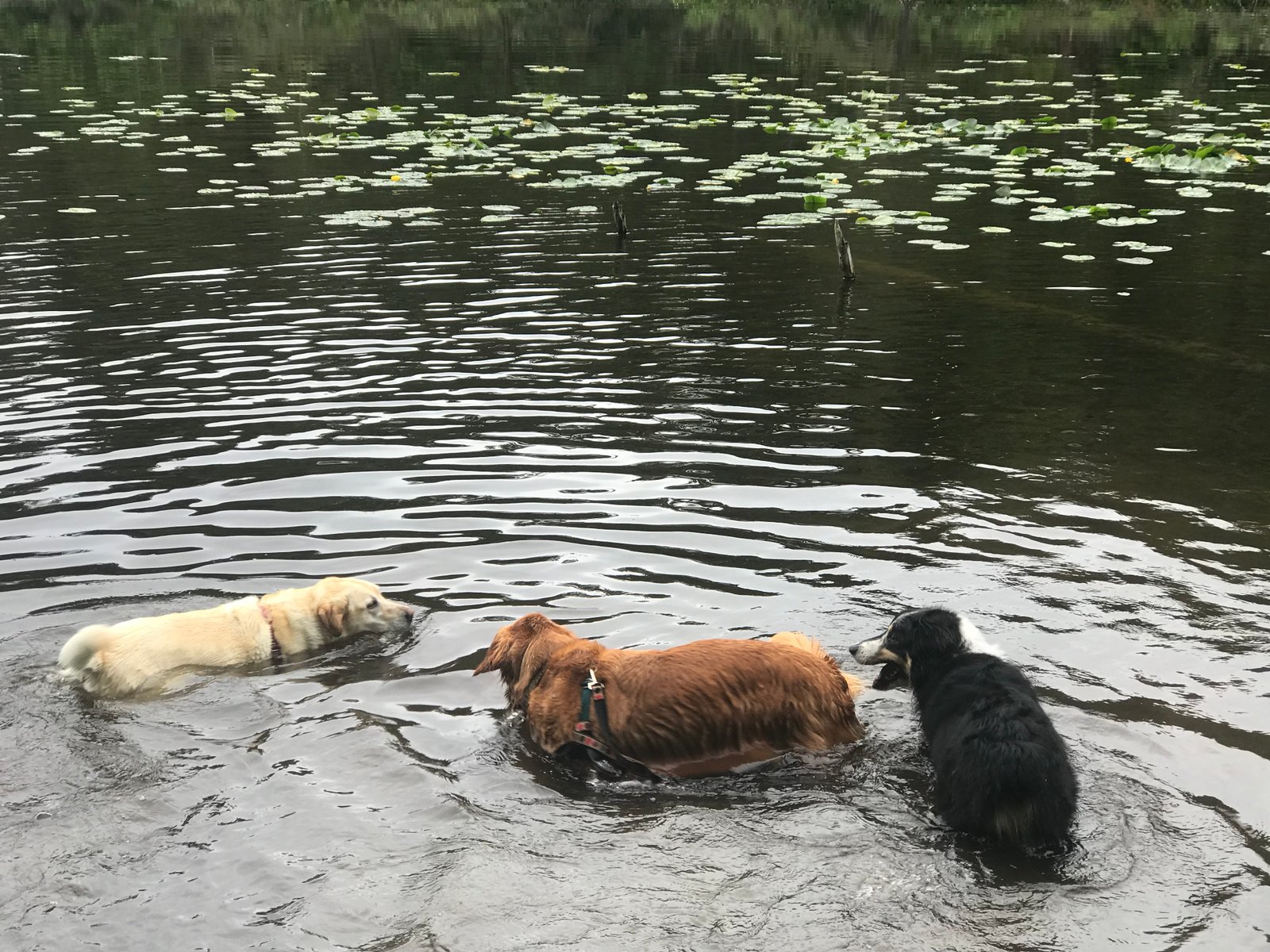
And the coffee afterward? That felt earned on a spiritual level.
Then everything changed quickly.
Sarah’s condition deteriorated rapidly only months after her diagnosis. Around the same time, Juno began limping badly. Both of them — my steady companions — were fading in ways I could neither stop nor fix.
I spent as much time with Sarah as I could before leaving for the expedition. Sometimes sleeping at her house. Sometimes her at mine. We sat outside whenever possible because she wanted to feel the air and watch the evening sunsets explode like great fires of crimson, amber, and violet stretching across the horizon.
I spent gentler days with Juno too, taking her on slower walks she could still manage.
As my departure date approached, a terrible thought settled quietly into the back of my mind: I might never see either of them again once I left.
It was the kind of thought you try to pack away quickly because if you hold onto it too long, you can’t move forward.
I think Sarah sensed it one evening while I sat beside her. She looked at me and said I had to go on this expedition. That it mattered. That it was bigger than us. She desperately wanted purpose herself, and despite everything she was enduring, she still helped me with the educational outreach for the voyage.
That was Sarah. Even in suffering, she was still giving.
My second-to-last night before departure, I visited her at her house. She wasn’t doing well. Her sister was there. Sarah and I talked quietly when she had the energy, but there were far more unspoken words between us than spoken ones.
Too much love. Too much understanding. Too much sadness to fit neatly into conversation.
But we knew.
We both knew.
She asked me to be strong for her, and I tried very hard not to fall apart in front of her. Instead, we laughed whenever we could. We made things beautiful all the way until the very end.
The morning of the expedition departure, I kissed my family goodbye, hugged my cats, and crouched down beside Juno one last time as she circled the car anxiously.
I hugged her tightly and told her she was the best damn dog I’d ever known.
And she truly was.
She helped me raise my children. She filled our lives with joy and ridiculousness and unwavering loyalty. I used to joke: WWJD — What Would Juno Do?
The answer was always simple.
Love completely.
Wag your tail whenever you can.
Try not to stress, sleep instead.
Find adventure everywhere.
She opened my heart in ways I didn’t even realize had been closed.
When I arrived at the dock that morning, I was stunned by the crowd gathering there to send us off. The boat was chaotic, I’d barely slept, and I suddenly felt wildly unprepared for departure.
Then I saw Sarah.
Sitting on a bench with an oxygen tank beside her, surrounded by family.
She had visibly declined even since the day before, but she came anyway.
I ran to her and wrapped my arms around her, overwhelmed that she had used what little strength she had to come say goodbye.
The morning unfolded in a blur of speeches, ceremonies, drums, blessings, and boats gathering to escort us out.
Then suddenly it was time to leave.
I looked over at Sarah and realized I didn’t want to go at all.
I watched Tess and Grace say goodbye to their “chosen mother” with tears running down their checks and anguish written all over their faces. A grief I couldn’t help them with, I was so entangled in it myself. The tears Sarah and I had both tried so hard to hold back finally came.
Then it was my turn.
I hugged her, I couldn’t let go.
She whispered that she was proud of me. Proud of what we were about to do.
I felt my knees weaken.
I remember the smell of her hair. Holding her hand. Memorizing the feel of it.
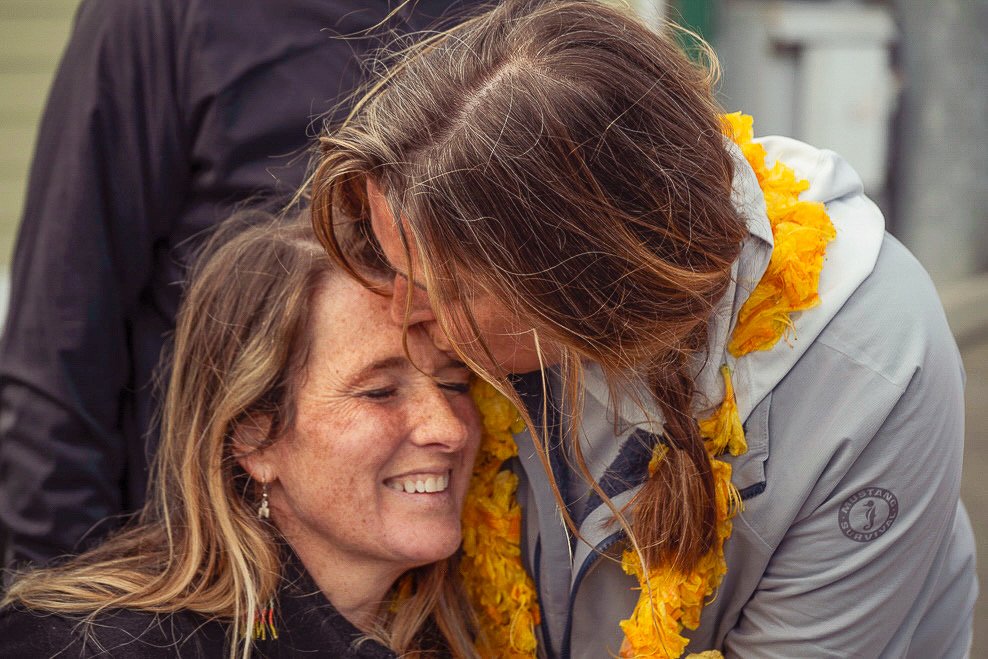
Then someone gently touched my elbow, and I felt my grip loosen. Maybe it was exhaustion or adrenaline or sheer emotional overload that kept my legs moving toward the boat. I couldn’t look back.
I climbed aboard One Ocean and somehow managed to steer us away from the dock and out into a parade of boats while my heart remained standing back there on shore.
Sarah died a few weeks later.
Juno died a few months into the expedition.
Grieving aboard a boat turned out to be both difficult and strangely healing. There was always work to do — sails to raise, watches to stand, weather to navigate — and in some ways that responsibility became a lifeline. The ocean gave me motion when grief threatened to stop me completely.
I have a lifetime of memories with Sarah and many beautiful years with Juno, but some of the happiest moments of my life will always be those mornings running through the woods together.
I will always picture Juno trotting through the forest beside us, wildly happy, tail wagging, convinced she owned the forest. And I will always hear Sarah’s laughter in the trees.